


In these mountains, water begins journeys that will eventually connect places far apart. The Neira River rises near A Fontaneira, carrying its waters to the Miño; further north, in Fonteo, the first waters of the Eo spring forth, crossing mountains, forests, and valleys before reaching the Cantabrian Sea.
The water we see welling up from a spring or flowing through a river or stream is part of a long journey that begins with rain, fog, or snow. Forests play a role in this process: they cushion the impact of precipitation, facilitate infiltration, protect the soil against erosion, and help maintain riverbanks and water quality
Caring for forests also means caring for the water we drink.
These essential benefits are part of the ecosystem services that forests provide to society as a whole. PEFC works to ensure they are recognized and valued.
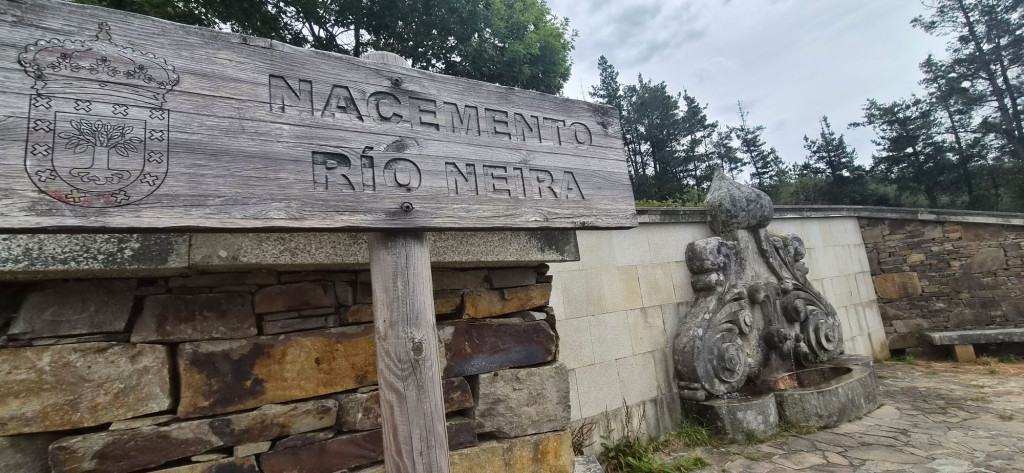
THE FOREST THAT PROTECTS THE WATER
The journey of the water.
The Neira River rises near A Fontaneira. Its waters flow towards the interior of Galicia until they meet the Miño, which ultimately empties into the Atlantic Ocean. In Fonteo, a name that seems to herald what is found there: the source of the Eo, begins another river that flows northward, eventually reaching the Cantabrian Sea via the Ribadeo estuary.
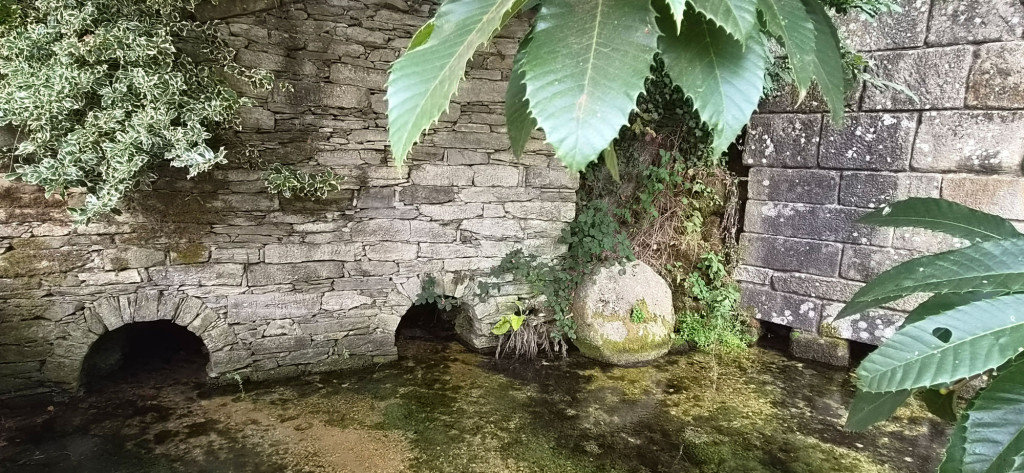
The source of the river Eo. Fonteo.
Two rivers originate in the same municipality and set out on different paths. It all begins with small springs and streamlets gathering the water that flows down from the mountains. What appears here as a mere trickle ends up shaping valleys, nourishing ecosystems, and connecting territories.
Water never stands still. It circulates through the atmosphere, falls upon vegetation, infiltrates the soil, feeds springs and streams, and returns to the sea, from where it will begin its journey anew.
When we drink, grow food, or turn on a tap, we rarely think about that long journey. Yet, the quantity and quality of the water available to us also depend on the condition of the soils, forests, and other ecosystems through which it has passed.
The forest that protects the water.
When it rains over a forest, the droplets do not all reach the ground in the same way. Some remain on the leaves and branches for a time; others slowly trickle down the trunks or fall onto the leaf litter. This vegetative cover cushions the direct impact of the rain and reduces soil erosion.
Beneath our feet, work continues that we barely see. Roots help anchor the soil and create spaces through which water can penetrate. Leaf litter and organic matter help retain moisture, while the forest floor holds and filters some of the water before it reaches springs, streams, and rivers.
Along the banks, riparian trees and shrubs play a particularly important role. Their roots stabilize the banks, the shade helps moderate water temperature, and the vegetation provides food and shelter for numerous species.
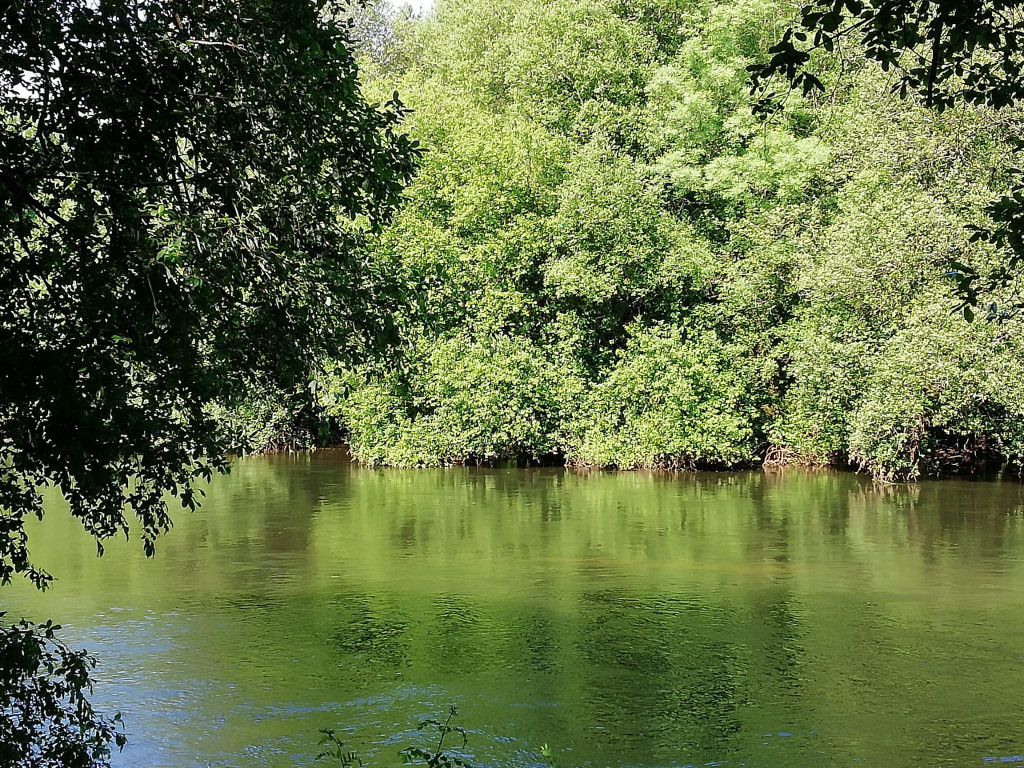
Everything is interconnected: if the soil is left unprotected, erosion increases; if the soil is washed away, it can end up in watercourses; and if riparian vegetation disappears, part of the river’s natural protection is lost. That is why caring for water also means properly managing the forests and lands surrounding it.
Regulating the water cycle, protecting against erosion, and maintaining water quality are some of the ecosystem services that forests provide to society, even though they often go unnoticed.
A RESERVE TO EXPERIENCE
Baleira is part of the Río Eo, Oscos and Terras de Burón Biosphere Reserve, declared by UNESCO in 2007 and shared by territories in Galicia and Asturias. The Eo River, from its source in Fonteo to where it reaches the Cantabrian Sea, is the thread connecting a vast mosaic of mountains, forests, valleys, agricultural lands, wetlands, villages, and towns.
In Baleira, the values of the Reserve are particularly evident in the relationship between water and the forest. Near the source of the Eo River lies the Fraga da Marronda, a valuable Atlantic forest where oaks, birches, chestnuts, hollies, hazels, and rowans coexist alongside a notable presence of beech trees.
The forest is part of the A Marronda ZEC (Special Area of Conservation), which is included in the Natura 2000 network. This European designation aims to protect habitats and species of special interest within the area and to ensure that activities carried out there are compatible with its conservation.
However, a Biosphere Reserve is neither a place frozen in time nor an area where all human activity must cease. It is a living territory that seeks to reconcile nature conservation with human well-being and sustainable economic development. Forests can harbor biodiversity and protect water resources while simultaneously providing timber, firewood, fruits, pasture, employment, and other renewable resources.
The mills, bridges, hórreos, paths, and villages found in this area also tell the story of how, for generations, the inhabitants have made use of water and the resources of the forests. The Primitive Way itself is part of this cultural heritage: a historic route that allows one to discover the landscape at a leisurely pace and understand the close relationship between nature and society.
Finding that balance is also one of the principles of sustainable forest management promoted by PEFC: responsibly utilizing the forest’s renewable resources, maintaining its regenerative capacity, and preserving its environmental, social, and economic functions for the future
WATER, FOREST AND RECREATION.
Forests and waterways create especially pleasant spots to pause, rest, and enjoy nature. The shade of the trees, the cool air, the sound of flowing water, or the chance to share an outdoor meal turn these spaces into little havens along the way.
In the vicinity of A Fontaneira, there are two spots where one can take a break. O Trabeiro, located right along the route of the Primitive Way, offers pilgrims a place to stop and rest amidst the trees. Nearby lies the A Fontaneira Recreational Area, set up next to the Lameira spring—the source of the waters that give rise to the Neira River. Tables and benches allow visitors to leisurely enjoy this little spot and discover that even great rivers sometimes begin as a modest trickle of water. A bit further from the Way is the Fonteo Recreational Area, where the Eo River rises.
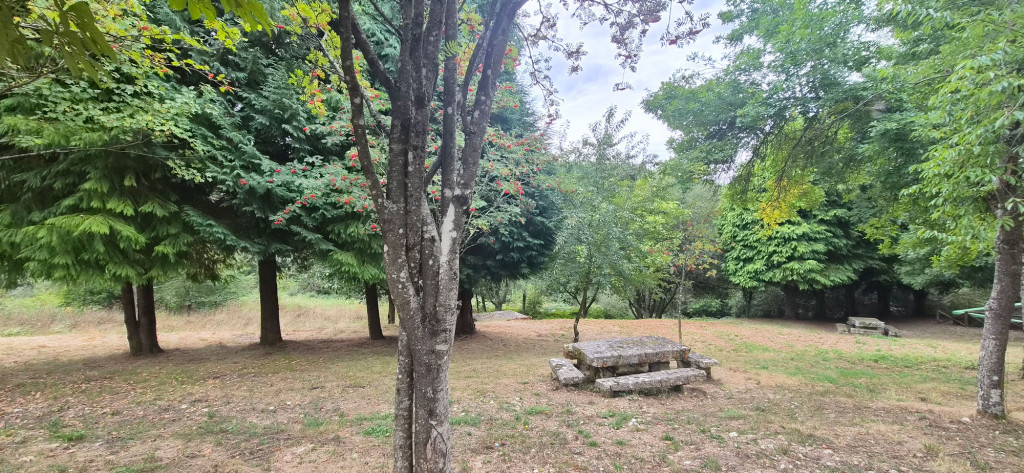
Recreational Area of O Trabeiro
These spaces remind us that ecosystems provide more than just water, timber, and other resources. They also offer us places to walk, rest, learn, meet others, and enjoy our leisure time. These are recreational ecosystem services that contribute to our well-being and, in turn, depend on the stewardship of water, soil, vegetation, and the landscape.
Recreational Area of A Cortevella
Although it lies off the route of the Primitive Way, the A Cortevella recreational area is worth a visit if you have the time. From this spot, you can take in one of the most spectacular landscapes in Baleira. From the higher ground, your gaze sweeps across hillsides, ridges, rocky outcrops, and stretches of woodland that layer upon one another until they fade into the distance.
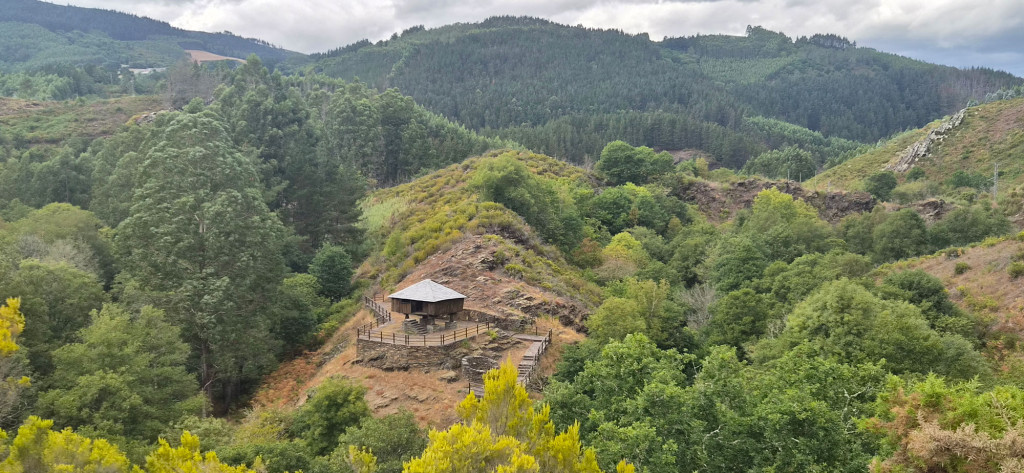
Área recreativa da Cortevella
The view reveals a landscape full of contrasts. The varying shades of vegetation, wooded areas, rocky outcrops, and traces of human activity create an expansive, ever-changing scene. Amidst this setting, the recreational area offers a place to pause, rest, and quietly contemplate a landscape that shifts with the light and the changing seasons.
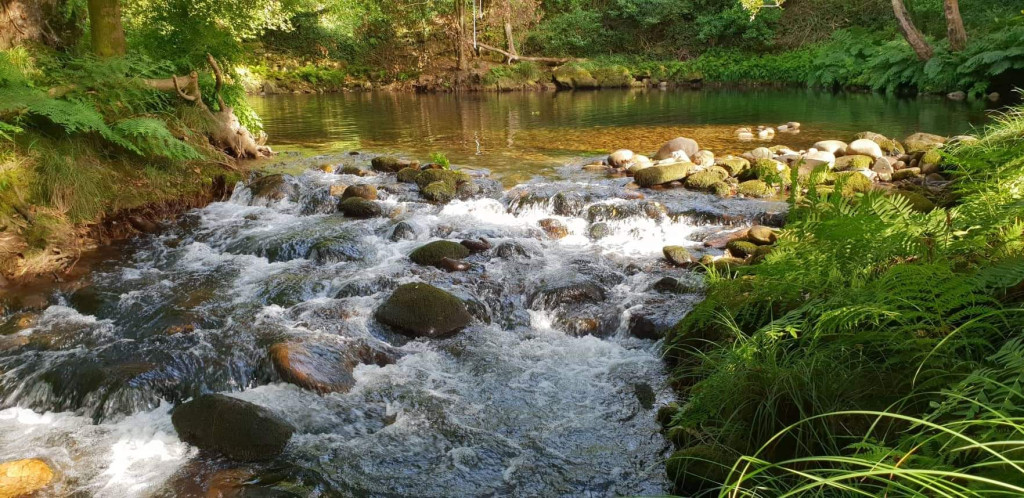
The Eo River flows through the lower parts of this area, offering insight into how water has gradually shaped the landscape, carving out valleys and forging a path through the mountains. Along its banks, one finds riparian vegetation, old mills, and spots where the sound of the water accompanies the journey.
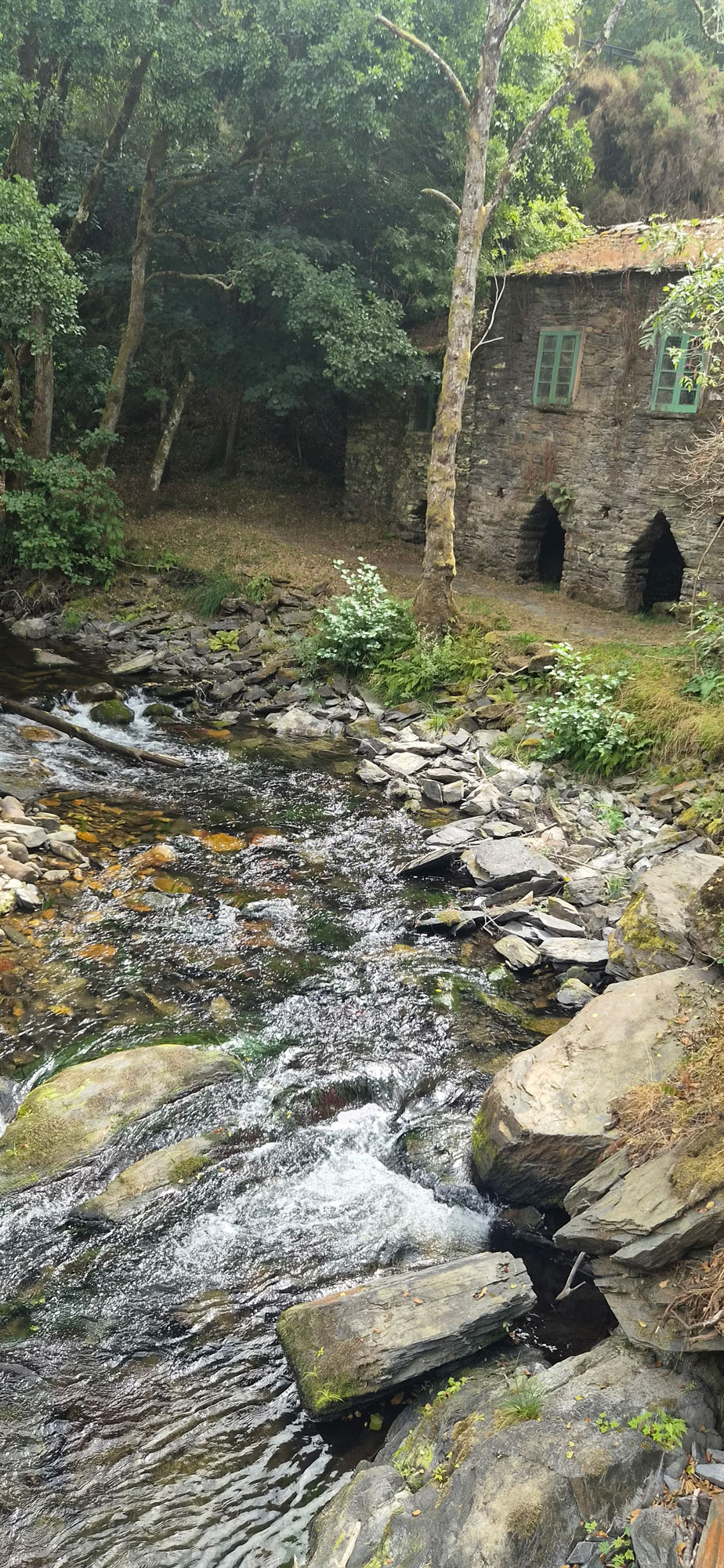
Muíño do Ferreiro.
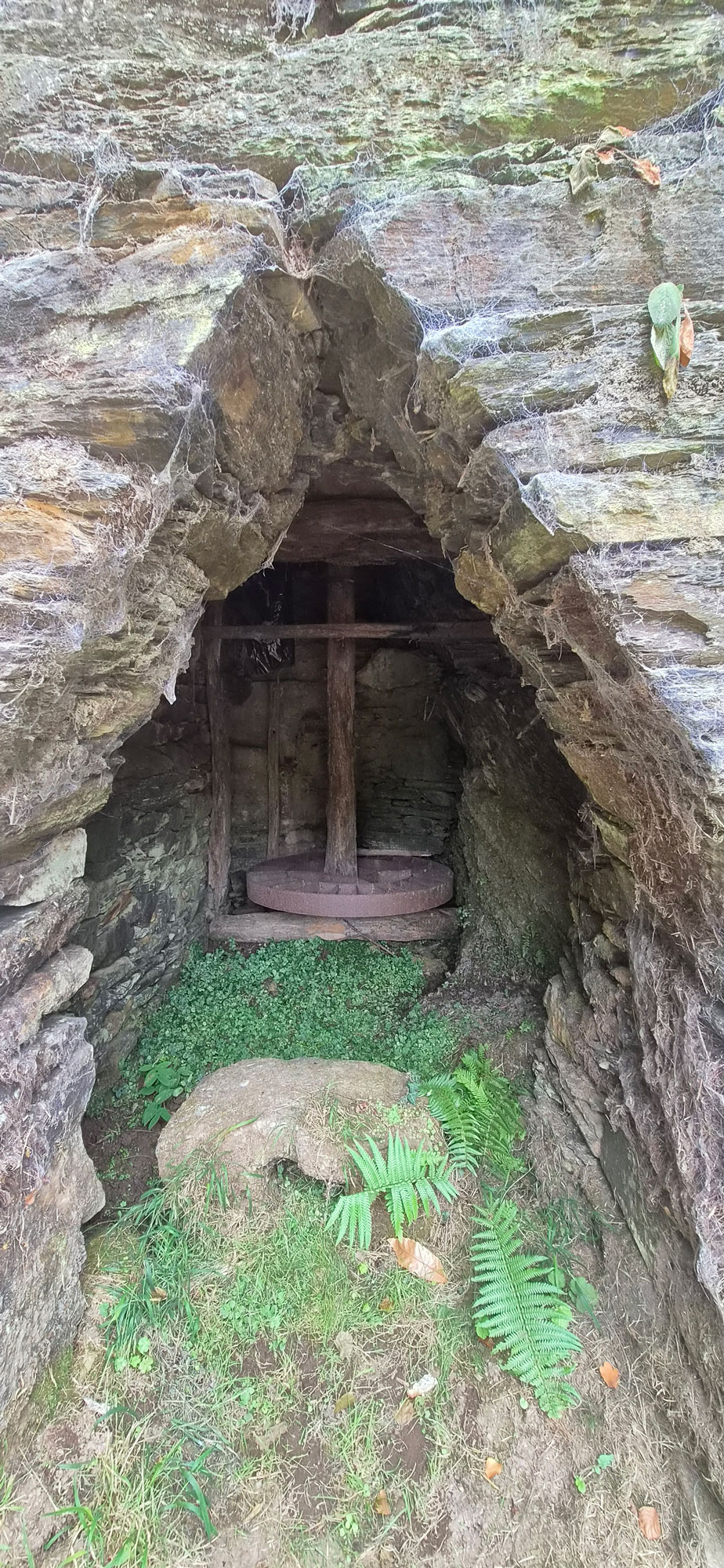
Muíño do Ferreiro.
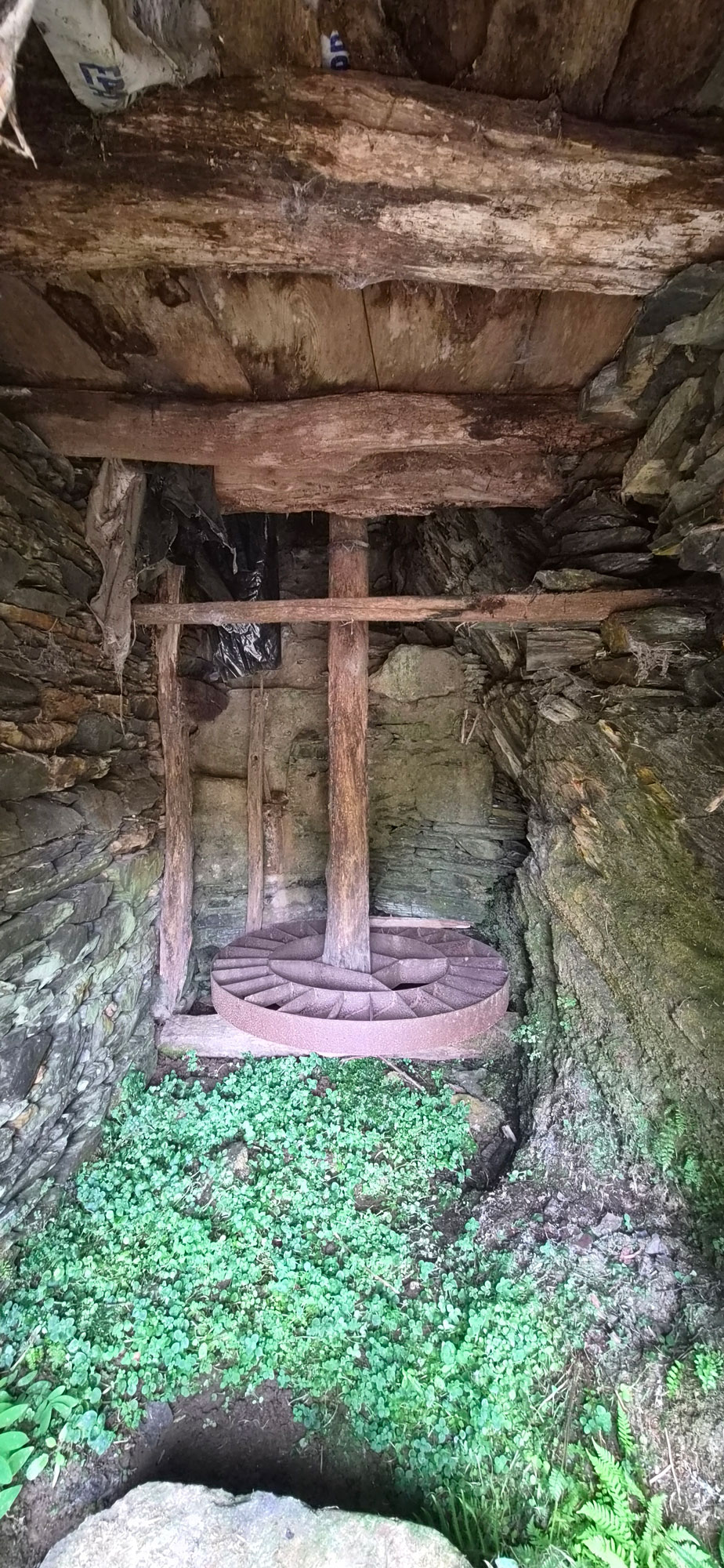
Muíño do Ferreiro.
The area also features picnic spots and serves as a great starting point for exploring the surroundings on foot. From here, you can follow the Ruta da Mina, which runs alongside the Eo River to an old gold mine, or venture into the Fraga da Marronda forest, following a trail that winds past woodlands, tributaries, historic bridges, mills, and other traces of the relationship between people and the landscape.
A sculpture of Saint Francis of Assisi stands at the top of the viewpoint. Reports indicate that the statue was installed in 2010 and, due to its weight and the difficulty of access, had to be transported to the site by helicopter. The initiative was supported by Galician migrants living in Catalonia and the Asociación Amigos da Marronda (Friends of A Marronda Association), founded by residents of Baleira to protect, promote, and highlight the value of this natural area.
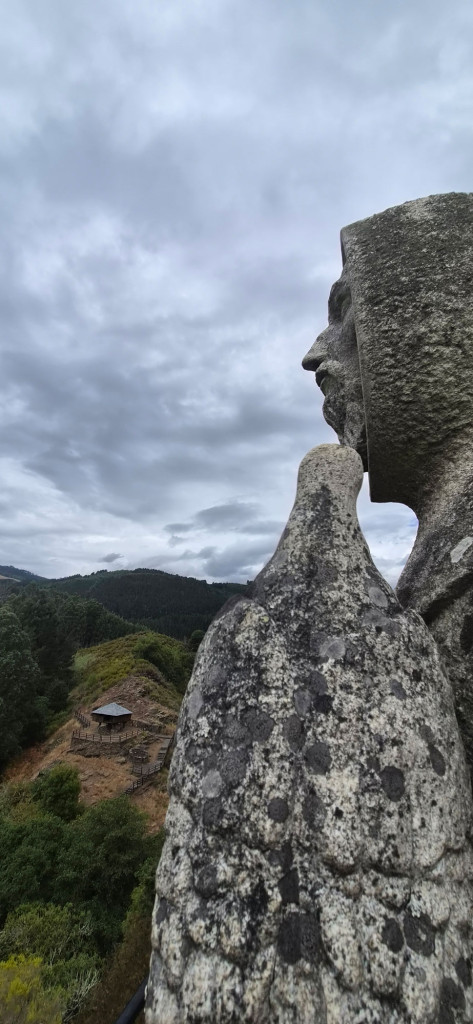
Lookout.
In the surrounding area, we also find an hórreo (traditional granary) and several ouriceiras, stone enclosures traditionally used to store chestnut burrs and protect them from animals while the fruit finished ripening. These features serve as a reminder that the forest has provided local communities with far more than just timber; it has also supplied food, energy, and other resources essential to daily life.
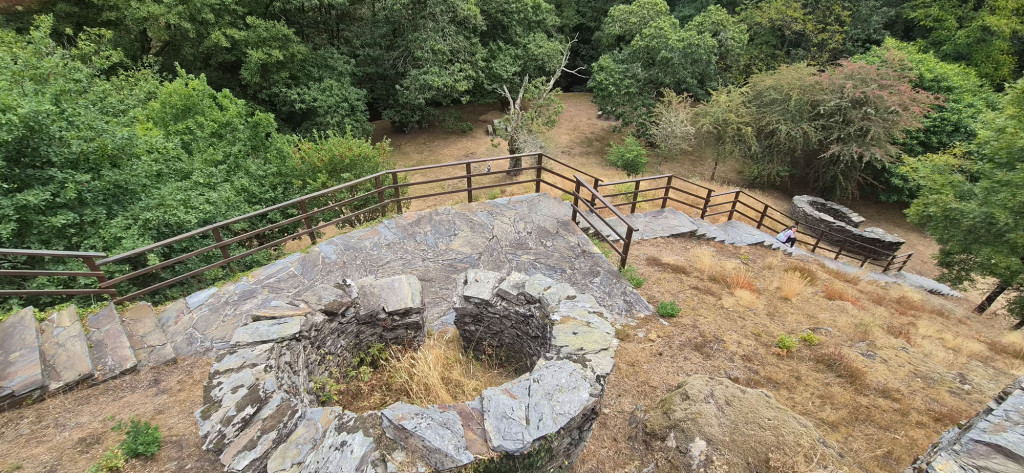
Ouceiras.
Sustainable forest management, such as that promoted by PEFC, helps preserve these recreational values while enabling the responsible use of the forest’s renewable resources. Because, a well-cared-for forest is also a place to live, work, and enjoy.
THE ROLE OF PEFC
Conserving water, managing the forest
Water, biodiversity, forest resources, and spaces for rest and recreation are among the many benefits provided by forests. Maintaining them requires managing the landscape with a broad perspective, taking into account both its environmental values and the needs of the people who live, work, or enjoy the area.
Sustainable forest management helps protect the soil against erosion, take care of watercourses and riparian vegetation, and reduce the impacts that forestry operations can cause. At the same time, it enables the responsible use of renewable resources such as timber, firewood, chestnuts, and other forest products.
One must also consider their social uses. Walking through a forest, resting by a river, or admiring a landscape are experiences that foster our well-being and help us understand and value the environment. To ensure their long-term sustainability, forestry activities and recreational use must be carried out in a way that is compatible with the conservation of natural values.
PEFC promotes sustainable forest management that seeks this balance and works to ensure that ecosystem services, such as water regulation, soil protection, biodiversity conservation, and recreational opportunities, are recognized and valued by society. For a well-managed forest is a living forest: it provides renewable resources, creates opportunities, and continues to offer us places to enjoy.

Project promoted by the Xunta de Galicia under the “O Teu Xacobeo” program