


As we make our way from Fonfría toward A Fonsagrada, the structures we encounter reveal another significant relationship between the forest and society: the use of wood to create spaces for living, working, storing food, or finding shelter.
For generations, mountain communities built using the resources available to them. Stone, slate, wood, and plant fibers were combined to suit the climate, agricultural activities, and the needs of each family. Today, innovation and new technologies allow wood to remain a part of our architecture, from the restoration of historic buildings to the construction of homes and multi-story buildings.
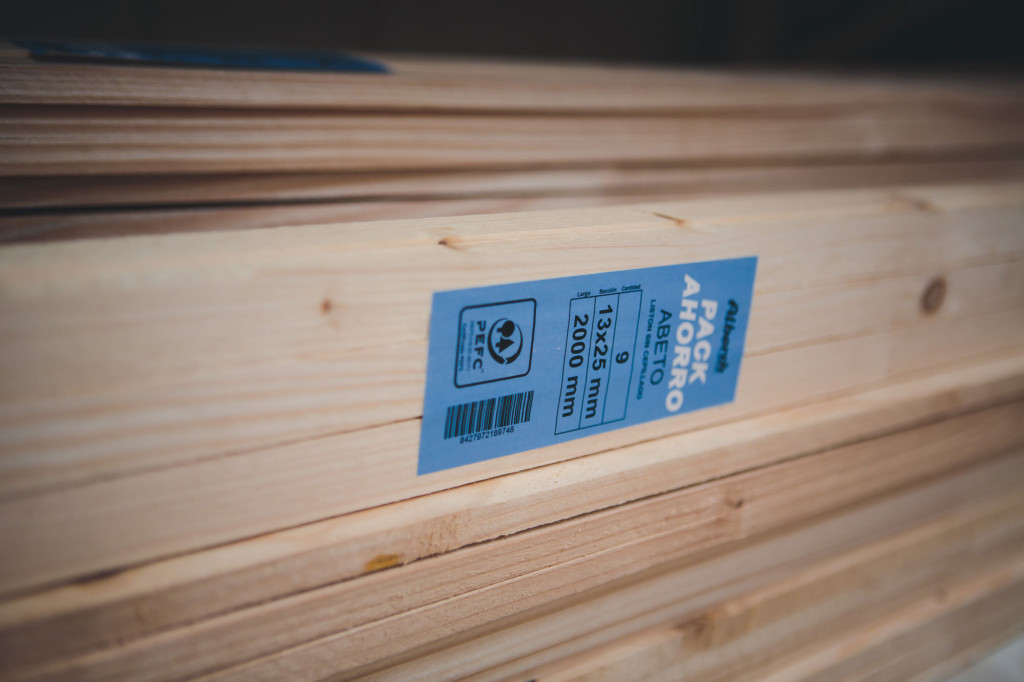
Wood is a natural, renewable material that connects the forest with the places we inhabit. When it comes from sustainably managed, PEFC-certified forests, we can trace its origin and utilize this resource with confidence as we continue to build the future.
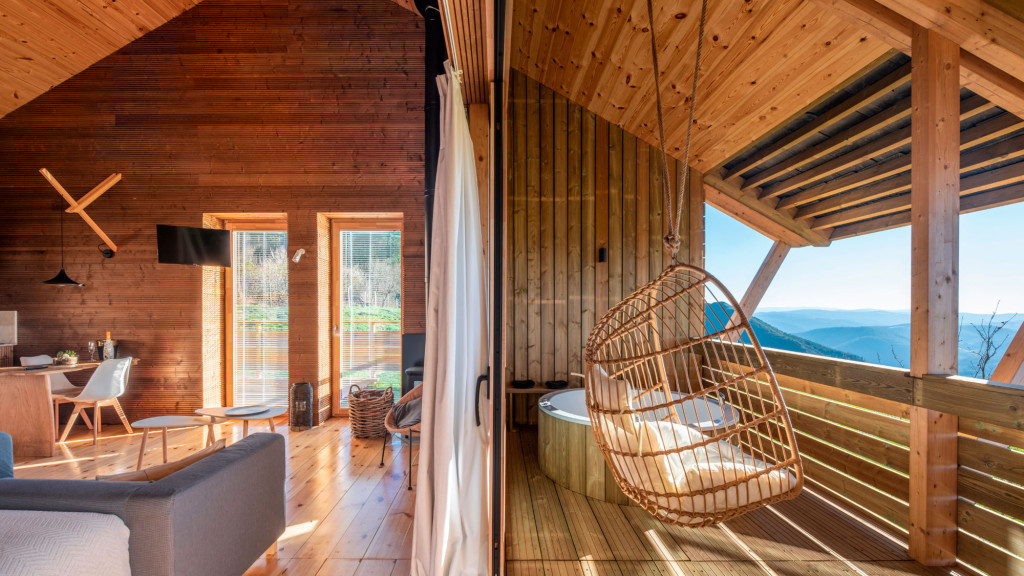
Image provided by Olladas de Barbeitos. A Fonsagrada.
WOOD WITH HISTORY
The traditional architecture of A Fonsagrada is deeply rooted in the landscape. Materials were not selected from a catalog; instead, people learned to recognize what the environment offered and to use it resourcefully. Stone and slate provided protection against a harsh climate, while wood made it possible to erect structures, fill openings, build doors and floors, craft furniture, tools, and implements, and construct small outbuildings.
It also provided heat. Firewood gathered in the hills helped with cooking and heating homes, making mountain winters more bearable. Every part of the resource was put to use, forming part of a daily economy based on making the most of what was available and avoiding waste.
Hórreos: build to preserve
Hórreos are among the most recognizable examples along your route of the relationship between the forests, agriculture, and architecture. They did not emerge to decorate the landscape, but rather to address an essential need: storing and preserving crops while keeping them ventilated and protected from moisture and animals.
In A Fonsagrada, we find a distinctive type of structure, generally built of wood and raised on stone supports. Alongside examples with a square floor plan, there are others with an octagonal plan—structures that are particularly unique. Their form, the materials used, and every one of their components reflect a function learned and perfected over generations.
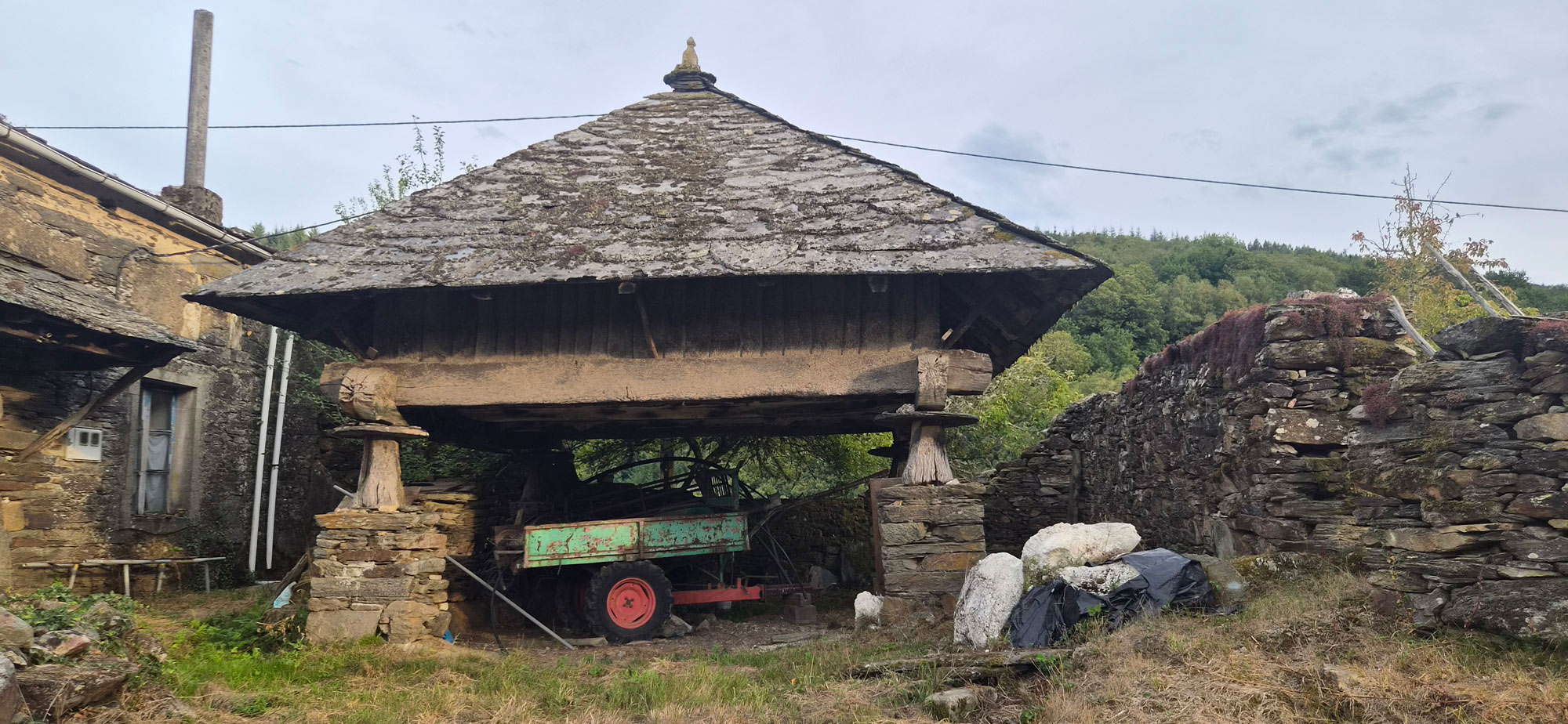
Horreoen Ferreirous. A Fonsagrada
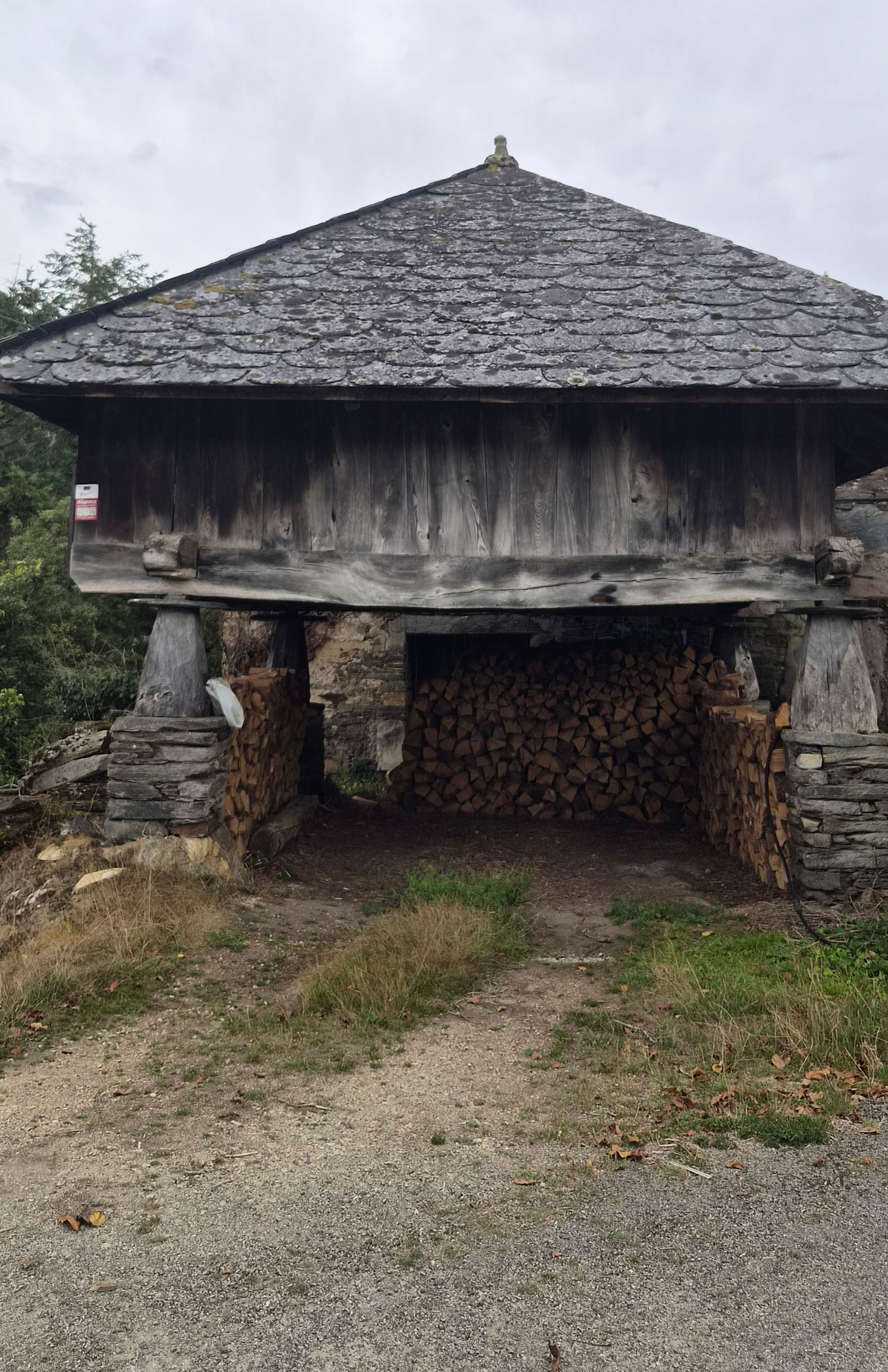
Horreo en Ferreirous. A Fonsagrada
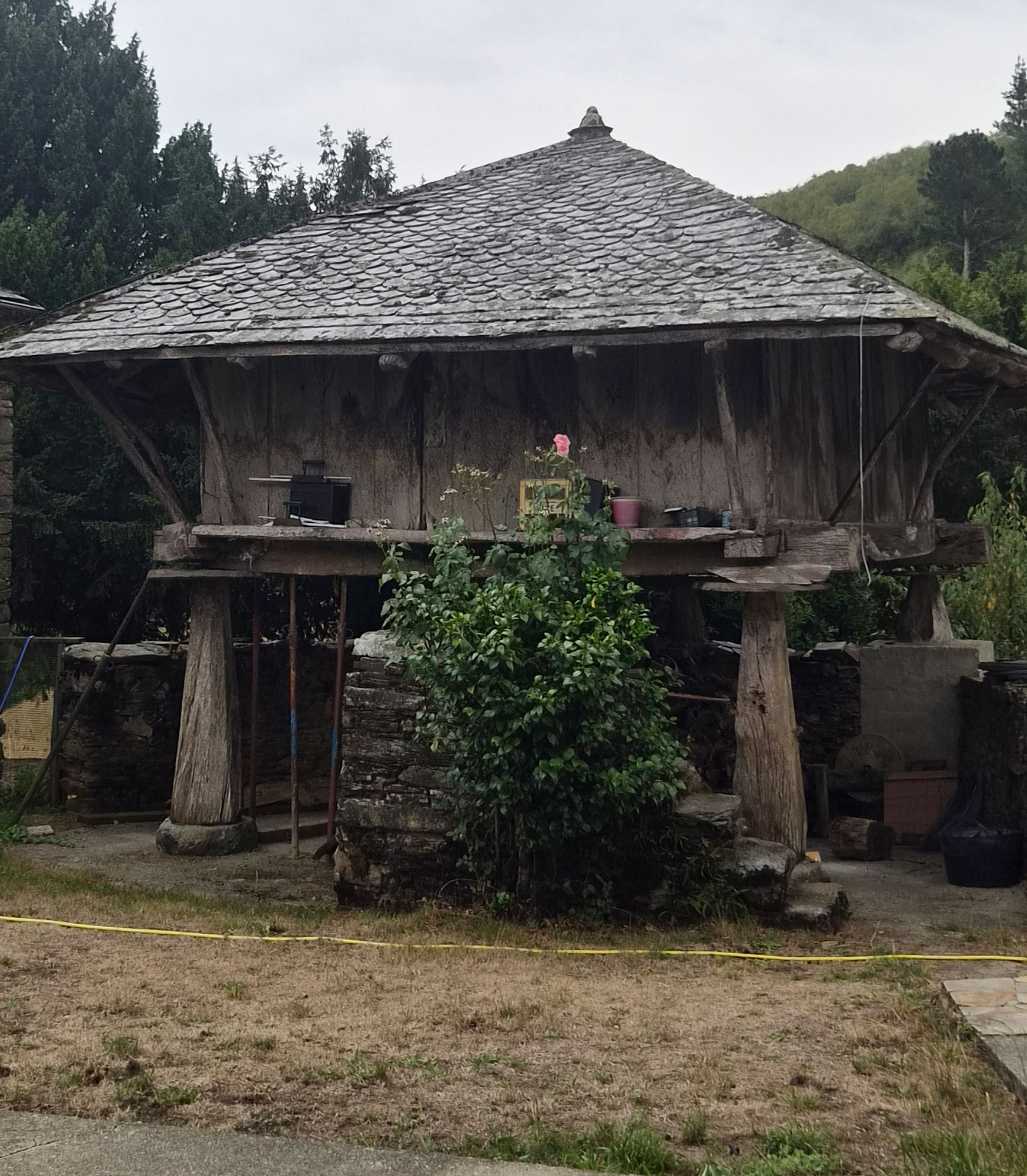
Horreo en Paradavella. A Fonsagrada
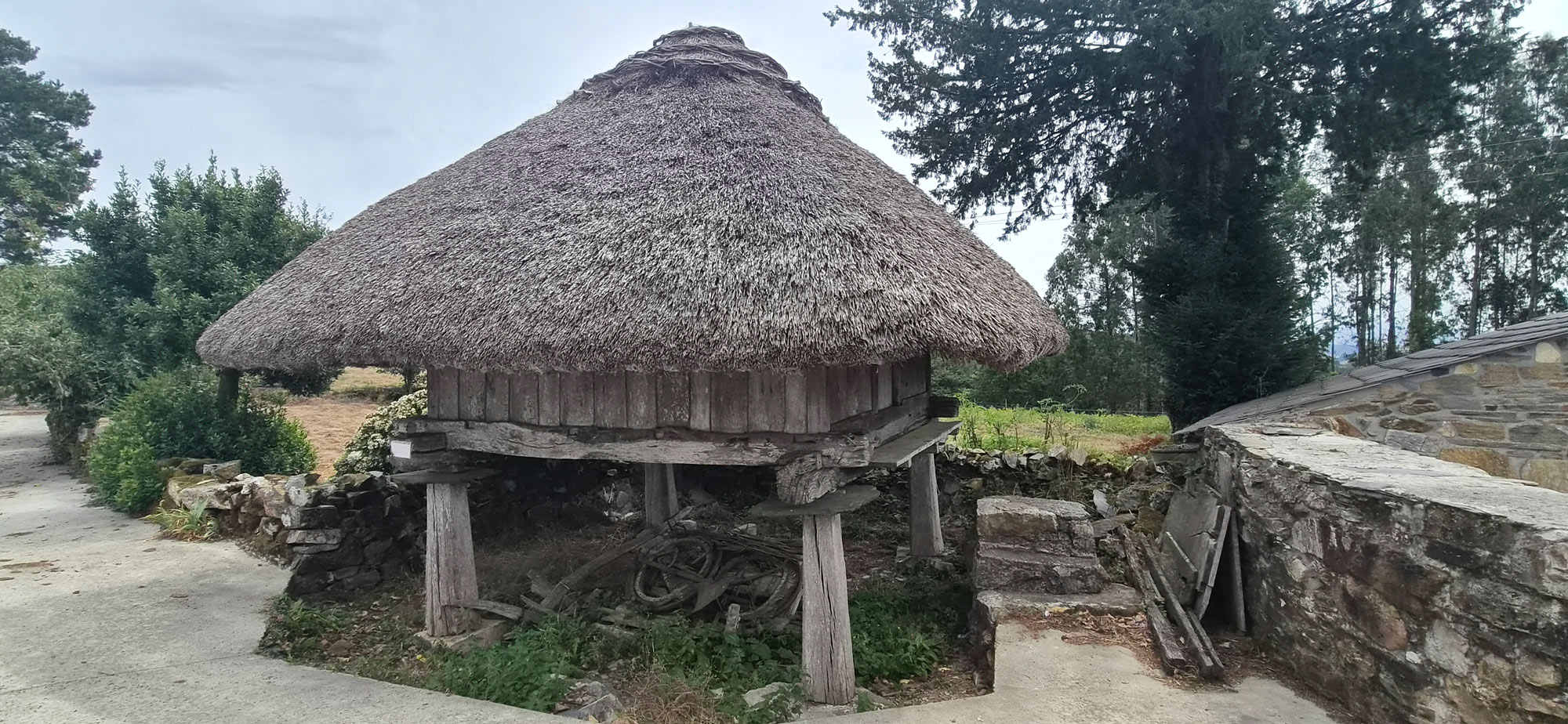
Horreo en A Fontaneira. Baleira
Along the Camino and in nearby villages, we can still find granaries, pallozas (traditional round stone dwellings with thatched roofs), roofing, enclosures, and other elements that demonstrate the historical importance of wood. These structures store not only food but also knowledge: they tell us how people learned to use the resources of the forest to adapt to the landscape.
PEFC works to ensure that timber harvesting continues to be part of our landscapes and our economy, guaranteeing that the resource comes from sustainably managed forests.
BUILDING WITH WOOD
Wood does not belong solely to the architecture of the past. New techniques for design, structural analysis, processing, and manufacturing have vastly expanded its possibilities. Today, it can be used in housing, public facilities, and multi-story buildings—in structures as well as facades, roofing, joinery, cladding, and furniture.
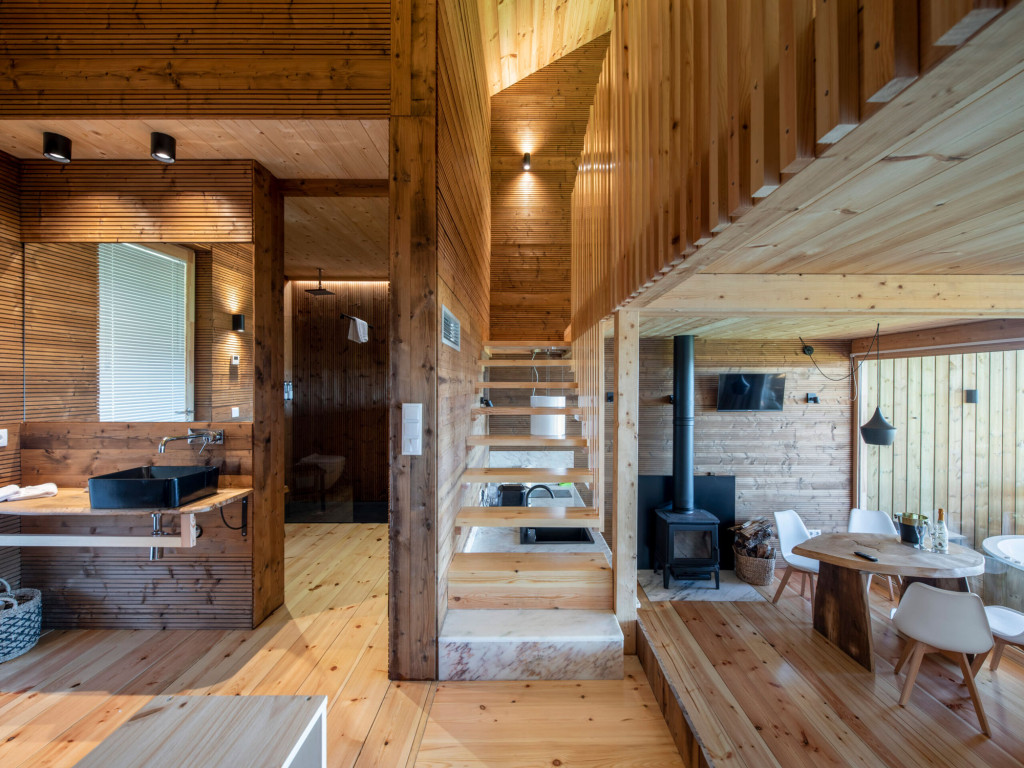
Image provided by Olladas de Barbeitos. A Fonsagrada.
Products such as laminated timber or structural panels make it possible to manufacture large, strong, and precise components. Many parts can be prepared in the workshop and arrive at the construction site ready for assembly. Furthermore, timber can be combined with stone, glass, steel, concrete, or other materials, using each one where it is most suitable.
Building with wood does not mean returning to the past. It means applying current knowledge and technology to a natural, renewable resource capable of offering solutions for the architecture of the present and the future.
Spaces that are also felt
Wood serves not only to support a building; it also influences how we perceive it. Its grain, tones, and texture reveal the material’s natural origins. Light falling on a wooden surface, the feel of a handrail, the sound of a wood-clad room, or its distinctive aroma can transform our experience of a space.
Many people associate wood with warmth, a sense of refuge, and a connection to nature. That is why it is found in settings where the aim is to create welcoming environments: homes, lodgings, libraries, cultural centers, schools, and relaxation areas.
Furniture also allows us to bring the forest into our daily lives. A table, a chair, or a bookshelf can stay with us for many years, becoming part of our history and holding memories of the spaces and moments shared around them. When time leaves its mark, these pieces can be repaired, restored, or given a new lease on life. That capacity to endure, renew itself, and continue to accompany us is also one of the gifts wood offers us.
PERSISTENT CARBON
Forests play an essential role in addressing climate change: they capture and store carbon.
A portion of that carbon remains in the forest, in the trees, vegetation, and soil. When wood is used to manufacture a product, the stored carbon does not disappear; it remains within a beam, door, floor, or piece of furniture throughout its service life. The more durable the product and the longer it is used, the longer that storage is prolonged.
For this reason, a building constructed from wood can also be understood as a carbon vault. And if its components are maintained, repaired, or reused in new construction, that carbon can remain stored for even longer.
Carbon capture and storage are ecosystem services that forests provide to society as a whole. Wood allows us to extend part of that service beyond the forest and bring it into the places where we live.
Stories held within the wood
It is not only large buildings that store carbon; small wooden objects that have accompanied people in their lives and work for generations do so as well. The Fonsagrada Regional Museum offers the chance to discover many of these items and to understand the extent to which the forest was a part of daily life in this region.
In its rooms, we find furniture, farming implements, containers, tools, and utensils associated with the home, agriculture, the forest, and various rural trades. As long as these wooden pieces are preserved, a portion of the carbon captured by the trees from which they were made remains stored within them. Yet they hold something more: knowledge, working methods, and memories of a society that knew how to make the most of the materials available in its environment.
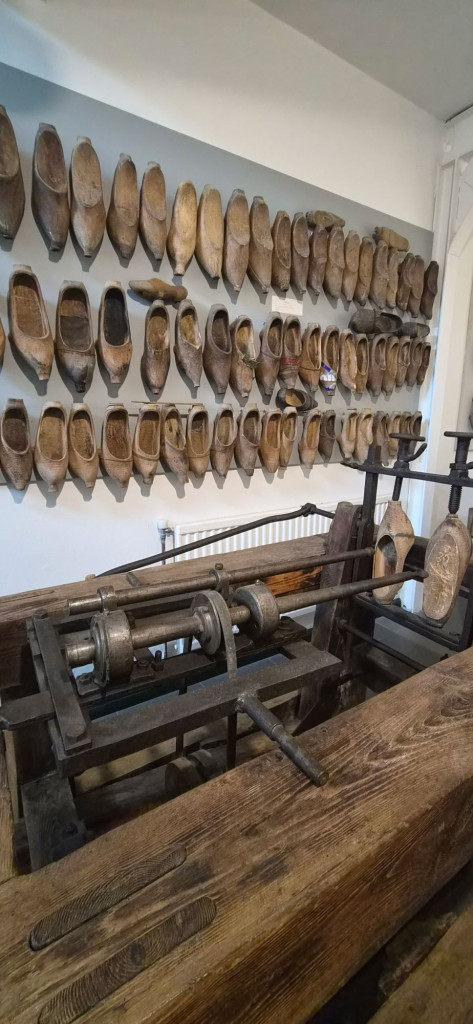
One of the trades represented is that of the zoqueiros—artisans who crafted clogs from a single piece of wood. Their work required an understanding of the material’s properties and the skillful use of various tools to cut, hollow out, and shape each piece. They used wooden lasts to fit the clogs to different sizes and also created special pieces, allowing each artisan to incorporate their own unique shapes and decorative motifs. These details made their craftsmanship recognizable and transformed an everyday object into an expression of identity.
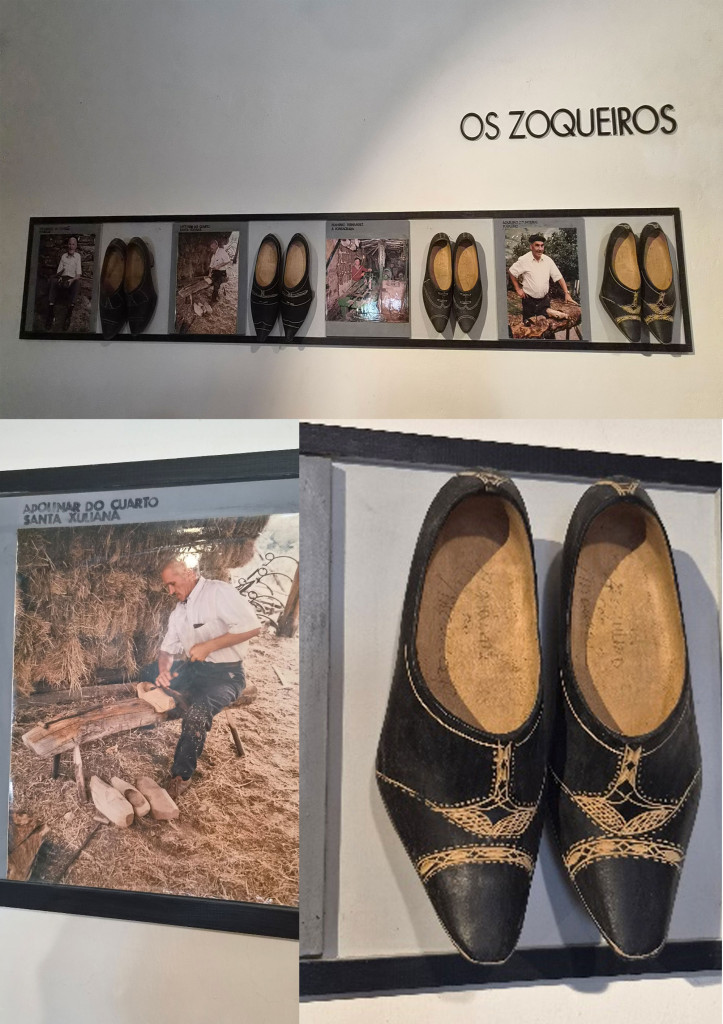
The Museum was founded in 1984 by a board of trustees made up of A Fonsagrada residents, with the aim of preserving and sharing the cultural heritage of the Lugo mountains. Its collection comprises ethnographic, archaeological, and contemporary art pieces. The ethnographic section recreates spaces such as a wine cellar, a forge, and a traditional hearth, while also dedicating areas to rural trades, farming, mountain life, schooling, religious traditions, and emigration. Vernacular architecture is also represented through models, plans, and photographs showcasing traditional building materials and construction methods.
Touring the museum allows one to see how a single raw material could be transformed into a tool, a piece of furniture, a container, an implement, or a pair of clogs. Many of these objects have outlasted the people who made and used them. Within them, the carbon once captured by the tree remains united with the memory of the people who knew how to transform its wood.
AWARD-WINNING ARCHITECTURE
In A Fonsagrada, we can observe how wood connects traditional building methods with new ways of living. Two projects recognized at the 2025 CESUGA–Pino de Galicia Wood Architecture Awards illustrate this evolution in a particularly intimate way.
Olladas de Barbeitos: a new life
On a hillside near the Camino stood an old calf-fattening shed that has since been given a new lease on life. The project by Salgado e Liñares Arquitectos transformed it into traveler accommodation, preserving the building’s original scale and highlighting the use of local wood.
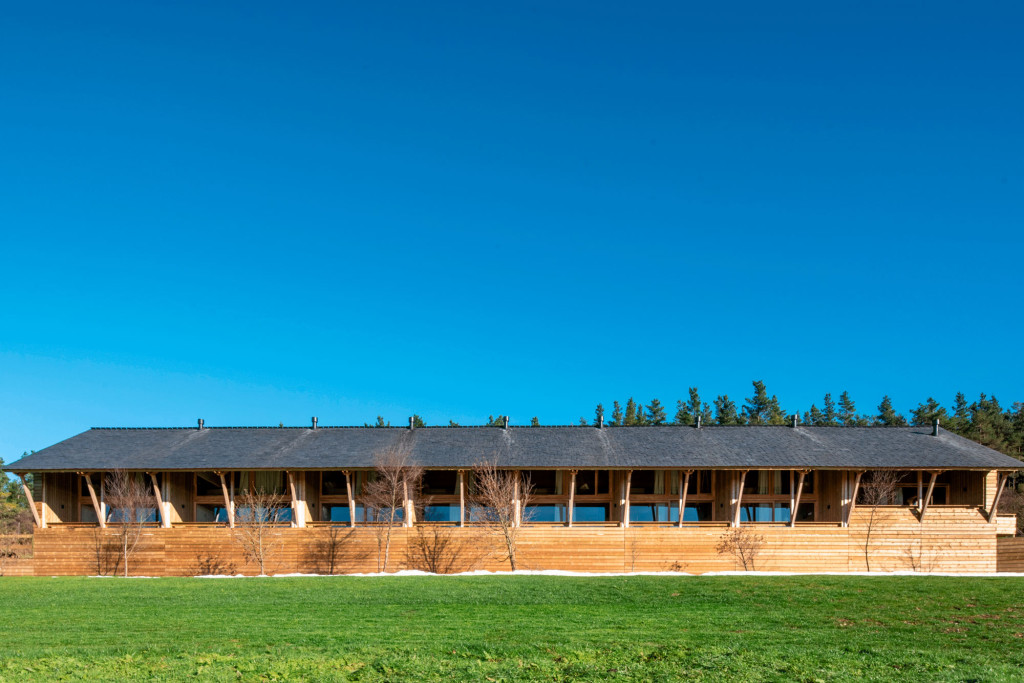
Image provided by Olladas de Barbeitos. A Fonsagrada.
A new structure, layout, and pine envelope allowed for a complete change of use. Locally sourced pine features in the façade, structural elements, ceilings, flooring, staircases, and various interior claddings. Furthermore, the use of heat-treated pine demonstrates how technology can enhance the material’s performance and expand its range of applications, even in damp environments..
The project won the award in the New Construction category. Its transformation reminds us that building does not always mean starting from scratch: it can also involve making use of what already exists, adapting it to new needs, and giving it a new lease on life.
Forges Cultural Center: wood, culture and memory
The former A Fonsagrada town hall, built in the 19th century and disused since 2015, has been renovated to house the Forges Cultural Center. The project by FIRM Arquitectura restores the historic building and incorporates PEFC-certified local chestnut wood into the structures, facades, carpentry, flooring, and wall coverings.
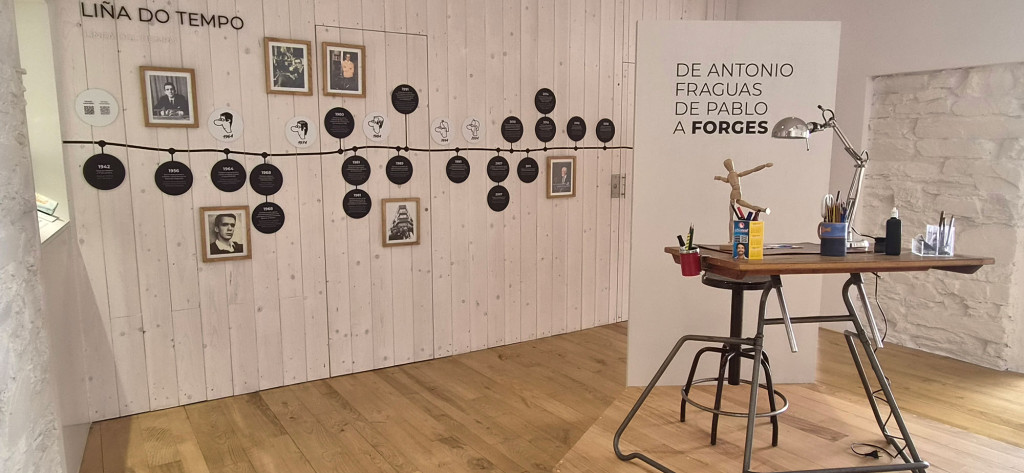
The wood engages in a dialogue with the old stone walls, helps organize the new spaces, and lends continuity, warmth, and identity to the ensemble. On the courtyard façade, the laminated chestnut elements serve multiple functions: they support the building envelope, regulate light entry, and contribute to solar protection.
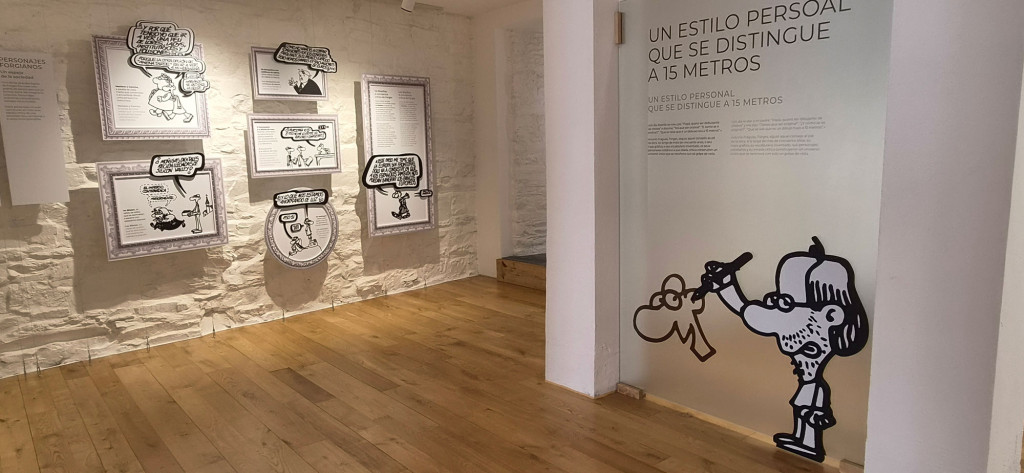
The use of locally sourced materials links heritage restoration with the local economy and forest resource management. In recognition of this commitment, the building received the inaugural PEFC Sustainable Timber Architecture Award.
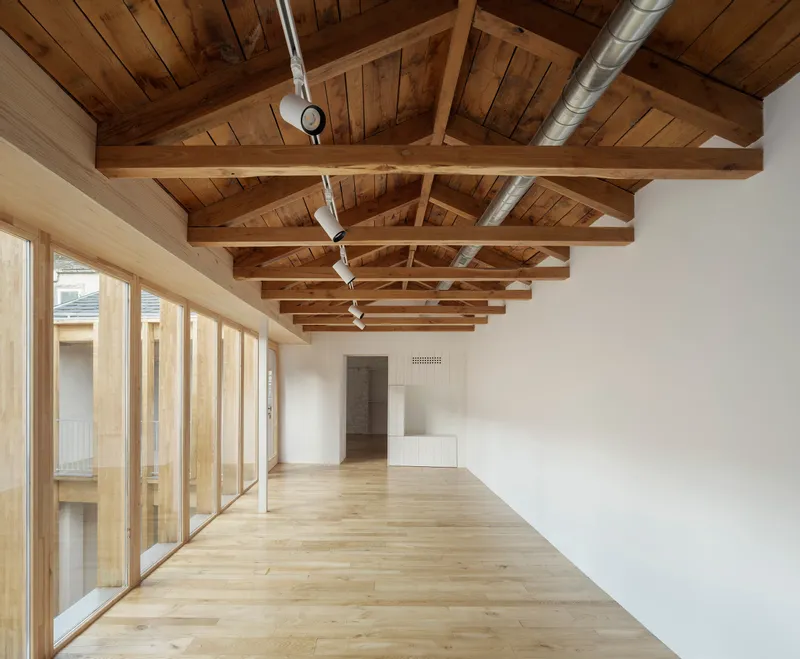
Olladas de Barbeitos and the Forges Cultural Center stem from different structures and needs, yet they share a common idea: wood can revitalize buildings, create new uses, and keep architecture connected to the territory.
THE ROLE OF PEFC
To speak of wood is also to speak of the forest from which it comes. The story of a beam, a window, or a piece of furniture begins long before it reaches the building: it starts in the forest, continues with the work of owners, managers, and forestry professionals, and moves forward through the companies that harvest, process, and market the material.
PEFC operates throughout that entire process. Sustainable Forest Management certification makes it possible to demonstrate that the forest is managed with regard to its environmental, social, and economic functions. This means preserving its productive capacity, protecting soil, water, and biodiversity, maintaining its vitality, and utilizing its resources with a long-term perspective.
Chain of Custody certification makes it possible to track the path of raw material through the successive stages of processing and marketing. Thus, certified wood found in a building can be verifiably linked to a sustainably managed forest source.
Certification does not make wood sustainable simply by virtue of its use; it provides a guarantee that we know its origin and that there is a verified commitment behind the material.
The forest provides a renewable resource; sustainable management enables its future use; the chain of custody tracks its journey; and architecture transforms the wood into spaces for people.
When we choose PEFC-certified wood, we choose much more than just a material. We recognize the work of those who care for and manage the forests, support a local economy, and help ensure that the carbon captured by trees remains stored in useful, durable products.
From the mountain you cross to the wood you inhabit, everything is part of the same story.

Project promoted by the Xunta de Galicia under the “O Teu Xacobeo” program