


Some names spark curiosity and invite us to uncover the stories they hold. Augas Santas is one such name. In this parish within Palas de Rei, the Fountain of San Xurxo serves as a starting point for exploring a connection that has always been with us: the relationship between nature and our health.
The water we drink, the plants that contributed to the development of medicines, the natural materials that surround us and the paths along which we walk are all examples of how the mountain environment is present in our well-being. Some of these benefits have been known since ancient times, while others are currently being studied by science, which helps us better understand their importance.
Here, PEFC invites you to discover how forests can contribute to our physical and emotional well-being, and why their sustainable management is also a way of caring for peopl
WATERS THAT GIVE A NAME
There are places whose names seem to hold a story. Augas Santas is one of them. The name evokes the relationship that traditionally existed in Galicia between certain springs, popular beliefs, and the beneficial properties attributed to their waters.
In the parish of San Xurxo de Augas Santas, located within the municipality of Palas de Rei, lies the Fountain of San Xurxo—a small piece of rural heritage that serves as a reminder of the vital role water has always played in village life.
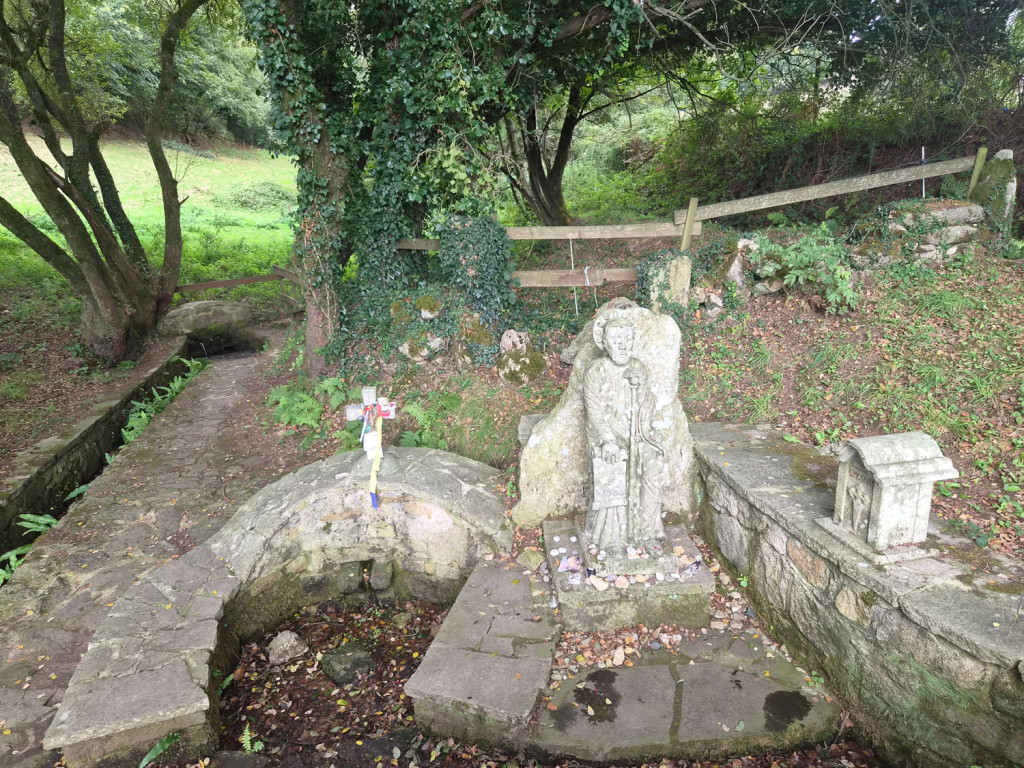
For centuries, many Galician springs were more than just places to fetch water. Some became associated with religious traditions, pilgrimages, or folk beliefs regarding health and healing. These stories are part of our cultural heritage, though they should not be confused with scientifically recognized medicinal properties.
Not all natural waters share the same characteristics. As water infiltrates the ground and circulates through rocks and sediments, it can pick up various minerals that influence its composition. In some springs, these specific features have given rise to what are known as medicinal mineral waters, which are recognized for their properties and used in certain thermal treatments.
Galicia has a long tradition linked to these waters, which gave rise to numerous spas and thermal establishments. Since ancient times, people have visited these places in search of relief from various ailments—a practice that, over time, came to incorporate scientific knowledge and treatments provided under medical supervision.
However, it is important to distinguish between popular tradition and officially recognized properties. For water to be classified as mineral-medicinal, it must meet specific requirements and have the corresponding administrative recognition. Likewise, the fact that a spring is natural or has a reputation for being beneficial does not necessarily mean that its water is potable or suitable for therapeutic use.
But there is a relationship between water, the mountains, and health that goes far beyond these beliefs.
The forest also takes care of the water
When it rains on a mountain, the trees, vegetation, and soil influence the path taken by the water. Some of it is intercepted by leaves and branches, some penetrates the ground, and some continues on its way toward streams and rivers.
Vegetative cover, roots, and organic matter help protect the soil against erosion and can reduce the transport of sediments. Meanwhile, riparian forests help stabilize the banks of watercourses and preserve their ecosystems.
Responsible forest management takes these processes into account, especially when harvesting or other operations are carried out near water sources, springs, and streams.
Forests do not, on their own, make the water that flows through them potable; however, their conservation and sound land management can help protect the water resources upon which we depend.
Thus, a small fountain can remind us of something much larger: that behind the water reaching our homes lies a territory that also needs to be cared for.
THE MOUNTAIN FIRST-AID KIT
Long before the existence of medicines as we know them today, people found resources in nature to alleviate various ailments. For centuries, leaves, flowers, roots, and bark were used in traditional remedies—knowledge that was passed down from generation to generation and also applied to the care of animals.
Galicia possesses a great diversity of plants to which medicinal properties have been attributed. Many grow in the hills, along their edges, in scrubland, or near rivers. Some remain in use within traditional medicine, while others have contributed to research and the development of pharmaceutical products.
Plants that look after us
Among the best-known examples is the willow, a tree commonly found along riverbanks and in damp terrain. Its bark contains salicin, a substance related to salicylates—compounds that played a role in the historical development of medications for the relief of pain and inflammation.
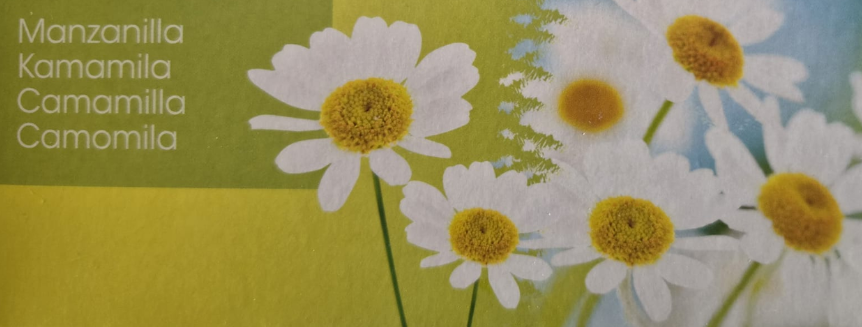
Chamomile, recognizable by its small white flowers with yellow centers, is one of the plants most widely used in traditional medicine. For centuries, its flowers have been used in infusions to alleviate mild digestive discomforts, such as a feeling of bloating or stomach spasms. It is also valued for its distinctive aroma and its soothing properties.
Another particularly interesting plant is arnica, recognizable by its yellow flowers and found in meadows, scrublands, and forest clearings. Traditionally, it was used to alleviate the effects of blows, contusions, and muscle discomfort. Today, there are medicinal preparations for external use made from this plant, and its traditional applications are recognized by the European Medicines Agency. Its presence in the wild also serves as a reminder of the importance of conserving the habitats in which it grows.
The elder, commonly found in hedgerows and cool, shaded spots, is another species deeply rooted in folk tradition. Its flowers and fruits have historically been used in various preparations, particularly as remedies for colds. Meanwhile, mallow, which can be found in meadows and along roadsides, was traditionally valued for the soothing properties of its flowers and leaves.
And who isn’t familiar with St. John’s wort? This plant, with its yellow flowers, commonly found in open, sunny areas, contains substances that have sparked interest within pharmaceutical research. Certain standardized extracts are used in medications to treat depressive symptoms, though they can potentially interact significantly with other treatments.
These are just a few of the species that make up the botanical richness of Galicia. This plant heritage and its traditional uses are documented in works such as the Guía de plantas medicinais de Galicia (Guide to Medicinal Plants of Galicia), authored by Antonio Rigueiro and Rosa Romero, professors at the University of Santiago de Compostela (USC), which helps to preserve and disseminate this knowledge.
And the animals?
Folk knowledge of plants also played a role in the care of livestock. In rural Galicia, various plant species were traditionally used in practices intended for the care of animals, a field of study known as ethnoveterinary medicine.
Furthermore, there is a particularly curious phenomenon, well known to everyone: some animals select specific plants or alter their feeding behavior when they experience health issues. This behavior, known as zoopharmacognosy, has been documented in various species, although it is not always possible to prove that a particular plant is being consumed for medicinal purposes.
It is worth remembering that some plants can be toxic to animals and that traditional uses are no substitute for veterinary care.
The mountain is, therefore, a source of biodiversity, tradition, and scientific knowledge. Conserving its species and the habitats in which they grow also means keeping open research possibilities that we do not yet fully understand.
WALKING IS HEALTHY
Every step we take along the Way sets our body in motion. The heart goes to work, the muscles are activated, and our breathing falls into rhythm with our stride.
Walking is one of the most accessible forms of physical activity. When practiced regularly and adapted to an individual’s capabilities, it helps strengthen the cardiovascular system, improve physical endurance, maintain mobility, and reduce the risk of various diseases. The World Health Organization highlights the benefits of physical activity for heart health, the prevention of chronic diseases, and overall well-being.
But, beyond the exercise, the place where we walk also matters.
Walking among buildings and traffic is not the same as walking along a path surrounded by trees. Although movement benefits the body in both cases, natural spaces can offer conditions that make the experience more pleasant and encourage physical activity.
Woodlands and other green spaces offer opportunities for physical activity in an environment where trees provide shade and help moderate temperatures, a particularly valuable benefit during the hottest periods. Vegetation can also help reduce the presence of certain air pollutants and dampen noise, creating settings that are more pleasant for walking or taking a break.
What does science tell us?
The benefits of walking in nature have also sparked interest within scientific research. Various studies have examined how walks in forests and other green spaces influence indicators related to cardiovascular health and stress.
Some scientific reviews have found reductions in blood pressure and improvements in other physiological indicators following participation in activities in nature. Although the results vary from person to person and remain a subject of ongoing study, they reinforce the importance of having accessible natural spaces for physical activity and well-being.
On the Primitive Way, each stage invites us to experience the relationship between movement and nature. The exertion of a climb, the relief of finding the shade of an oak grove, or the coolness of a path running alongside a stream, all are part of an experience in which the body is set in motion and the landscape accompanies us.
And it is not about covering more kilometers or arriving sooner. Adapting your pace to your own capabilities, resting when you need to, and enjoying the journey are also part of a healthy way to walk.
Because the Way does not just take us from one place to another: it also offers us the opportunity to move, breathe, and feel the benefits of being in contact with nature.
A RESPITE FOR THE MIND
Some begin the Way for spiritual reasons, others seek a different kind of experience, and some simply wish to step away for a few days from the rush and worries of everyday life.
For many people, walking becomes an opportunity to disconnect from their routines, share conversations, spend time outdoors, or find moments of silence.
There are sensations we recognize immediately upon entering a forest: the scent of damp earth after the rain, the smell of leaves and wood, the green of the trees blending with colors that shift throughout the seasons, the song of birds, or the sound of the wind moving through the branches. The light filtering through the canopy and the silence we sometimes encounter along the trails invite us to pay attention to small details that often go unnoticed in everyday life.
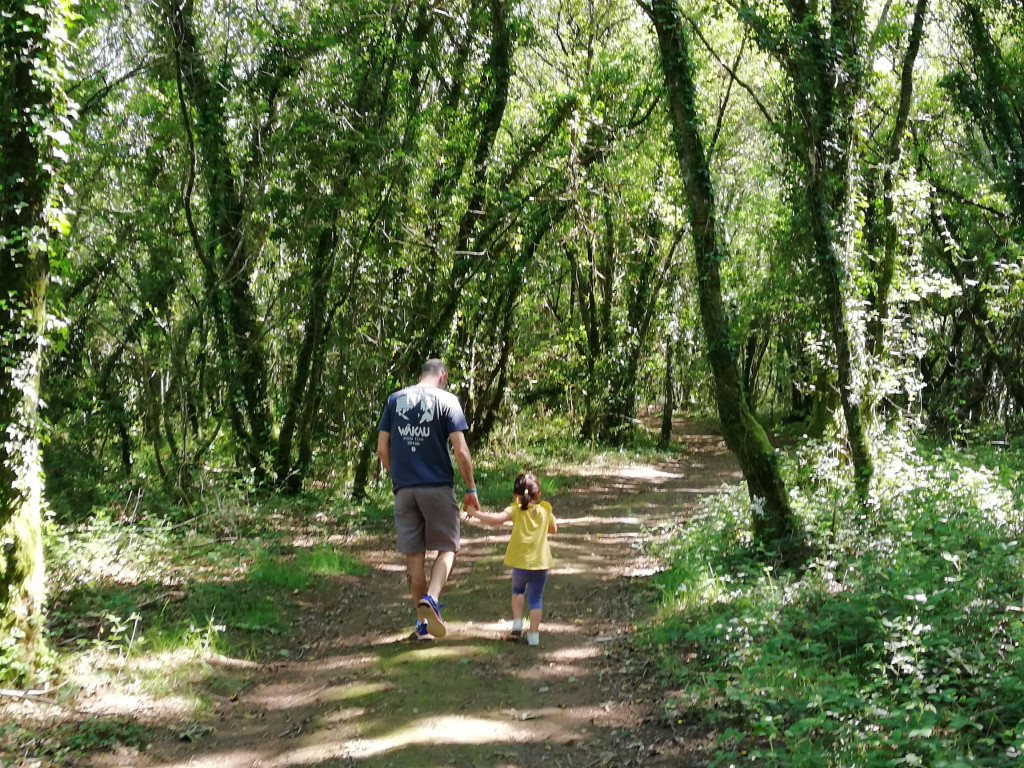
These sensory experiences can help us shift our attention away from everyday worries and foster a sense of rest. There is no need to do anything special: sometimes, simply walking more slowly, observing the scenery, or pausing for a few minutes to listen to our surroundings is enough.
The World Health Organization has gathered evidence linking contact with green spaces to relaxation, physical activity, and specific mental health benefits.
Also being studied are so-called forest baths, a practice that involves spending time in a forest environment while paying attention to one’s surroundings, including sounds, shapes, and physical sensations, without the need for strenuous exercise. Some research has observed short-term improvements in indicators of stress and well-being, though the long-term effects remain a subject of ongoing study.
The Way is also being researched
The Ultreya study, published in 2024 in the scientific magazine Journal of Happiness Studies, analyzed the experiences of 444 pilgrims and compared them with those of a group of 124 individuals who took a vacation that did not involve a pilgrimage. The results showed that, after completing the Way, the pilgrims experienced improvements in life satisfaction and emotional well-being, as well as reductions in anxiety and perceived stress. For several of the measures studied, these changes persisted three months later. Compared to the vacation group, the pilgrims also showed greater improvements in certain psychological indicators.
The study does not allow for attributing all these benefits exclusively to contact with the wilderness. Many factors converge along the Way: physical exercise, nature, interactions with other people, a break from one’s usual obligations, and time set aside for personal reflection.
But the results help us understand why this experience can hold such profound meaning for those who go through it.
Perhaps for this reason, upon completing the Way, some people feel that they have not merely covered a distance—they have also found time to listen to themselves, discover new perspectives, and view life in a different way.
A LITTLE PIECE OF FOREST INDOORS
Have you ever entered a room paneled in wood and felt a special sense of calm or well-being? Its color, grain, texture, and even its scent can evoke nature and create warm, inviting spaces.
This relationship between natural materials and our sensations is part of what is known as biophilic design, an approach to conceiving spaces that seeks to bring nature closer to the places where we live, study, work, or receive healthcare.
Wood possesses characteristics that make it particularly well-suited for such environments. Its presence can contribute to a sense of comfort and a pleasant perception of the space. Furthermore, certain wood products can help improve acoustic conditions and, depending on their specific properties and application, contribute to regulating fluctuations in ambient humidity.
But its contribution goes beyond its technical properties. A wooden floor beneath one’s feet, a table upon which we rest our hands, or a wall revealing the grain patterns of a tree, these are all small ways to maintain a connection with a natural material. Unlike other surfaces, each piece of wood possesses its own unique colors, patterns, and textures, which lend personality to a space.
Wood also changes with light and the passage of time. Lighter tones can convey brightness, while darker ones create cozy, intimate settings. Its presence pairs well with other materials, allowing for the creation of highly varied spaces, from traditional rooms to contemporary architectural interiors, all while maintaining a connection to its natural origins.
This connection to nature does not depend on an entire room being built of wood. Sometimes, a piece of furniture, a door, an exposed structural element, or a small everyday object is enough to introduce its texture and warmth into the spaces we inhabit.
In this way, wood becomes a link between the forest and our daily lives. It is a natural, renewable resource that, beyond serving a practical purpose, can help us create environments in which we feel comfortable and close to nature.
Because we don’t always need to be among trees to feel a bit of the forest around us.
THE ROLE OF PEFC
Forests offer us much more than timber and other forest products. They also contribute to the protection of water resources, harbor a great diversity of plant species, and provide spaces for physical activity, rest, and enjoying nature.
These benefits are linked to human health and well-being, but they also depend on the conservation status of ecosystems and how we manage the land.
PEFC promotes sustainable forest management that seeks to reconcile the responsible use of resources with the conservation of biodiversity, soil, water, and the social values of forests.
This entails planning forestry operations, protecting watercourses and habitats of interest, conserving natural resources, and taking into account the recreational and cultural uses of the land.
At the same time, PEFC Chain of Custody certification makes it possible to track the origin of certified forest products, such as timber used in construction, furniture, or interior paneling, from the forest to the consumer.
Because caring for our forests also means caring for our health and well-being, today and for generations to come.

Project promoted by the Xunta de Galicia under the “O Teu Xacobeo” program