


In Melide we join Caminos. The mountains of O Careón form the last section of the Camino Primitivo before joining the Camino Francés in the centre of Melide.
While you enter into the municipality of Melide, you start your route in the province of A Coruña and your landscape also varies. It is a transition stage in terms of tree formations.
The municipality has a high agricultural activity, and of course tourism, linked to the Camino de Santiago, although the forestry sector is becoming more importance.
Maintaining or increasing the forest area, especially the wooded area, except for forest defense actions (fires), adaptations to current legislation or others aimed at improving its multifunctionality, is one of PEFC’s objectives. It is essential that this area is orderly, which will allow forest owners and managers to properly plan and schedule the work to be carried out on their forests.
The trees of the Camino
68.6% of the total Galician area is classified as forest use, and this can be wooded, sparsely wooded, or treeless. In Galicia, according to data from the latest National Forest Inventory, 1,424,094.17 hectares are wooded; therefore we could say that practically half of our Community is wooded. The evolution shown by the different inventories is positive.

Source: IFN1, IFN2, IFN3, IFN4. Ministerio para la Transición Ecológica y Reto Demográfico (Ministry for Ecological Transition and Demographic Challenge)
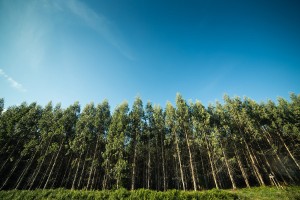
Such surface is made up of different tree formations, which respond to the evolution of the masses in the different biogeographical regions present in our Community. These tree formations are grouped, mainly according to criteria of main species, objectives and density of trees.
In the following map you can see the distribution and area occupied by the different tree formations in the four Galician provinces, and see how a transition begins in the municipality of Melide and where your landscape begins to change.
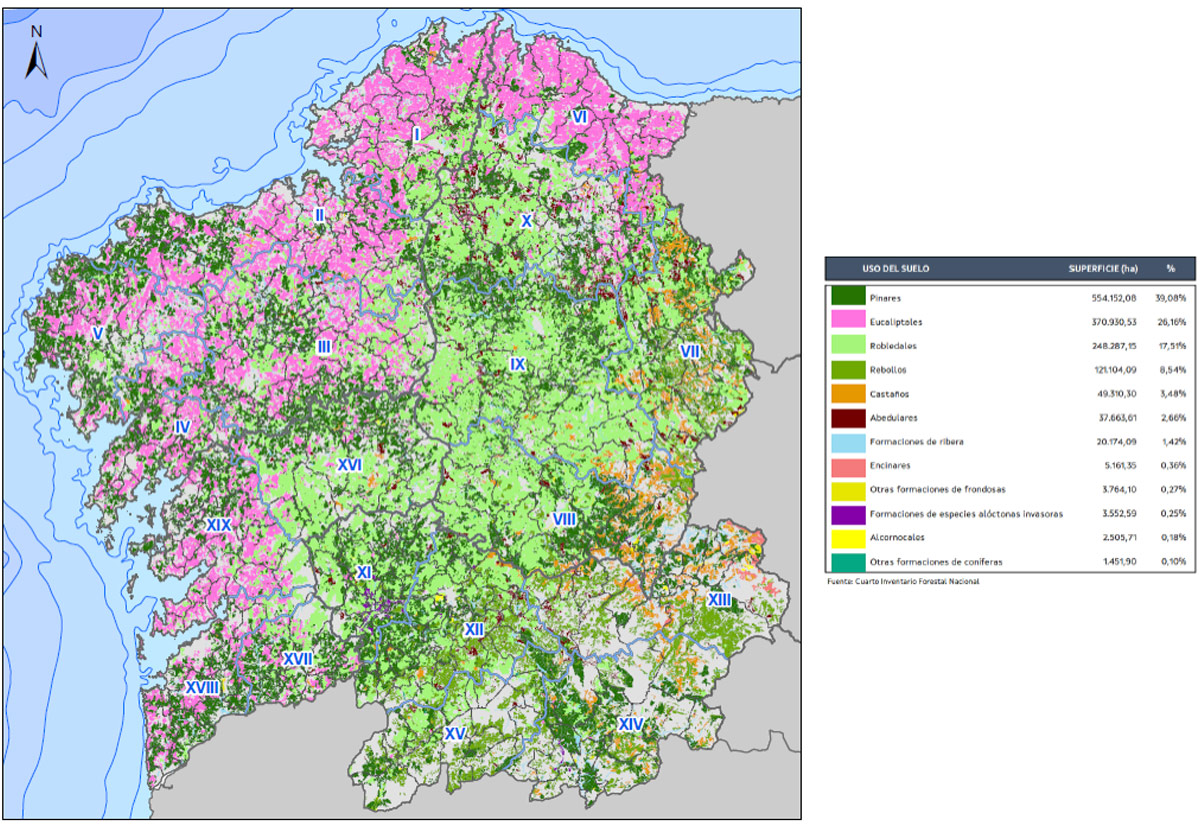
Source: PLADIGA 2022
Up to now, your Camino has mainly run through native leafy trees and pines, and it is now when the pine forests begin to gain greater presence and more and more species of eucalyptus , which are the most predominant in the province of A Coruña.
Regarding the geographical distribution of areas of forest by dominant species, we can make the following generalizations:
– The pure stands of Pinuspinasterare distributed throughout all the provinces, but with a greater presence in A Coruña (70,216 ha) and Ourense (57,678 ha).
– In the coastal area, the mixture of Pinuspinasterand Eucalyptusglobulusis very remarkable, standing out in the the province of A Coruña , where they cover more than a third of the forest area.
– The stands of Pinussylvestrisare found mainly in the mountains of Lugo (16,990 ha) and Ourense (15,747).
– The stands of Pinus radiata are found mainly in Lugo (65,665 ha) and in the interior of A Coruña (24,478 ha) and
– The native leafy trees stand out in Ourense and Lugo.
– Mixtures of Pinuspinaster, Eucalyptusglobulusand Quercus roburflourish in the province of A Coruña (97,050 ha) and Pontevedra (53,190 ha). It is worth highlighting the 43,965 ha of mixed Pinuspinasterand Quercus roburin the province of Lugo.
– The pure stands of Eucalyptusglobulushave a predominant presence in the north of A Coruña (144,523 ha), Lugo (61,820 ha), and in the centre of Pontevedra (41,825 ha); being practically non-existent in Ourense.
Find out more about some of our trees by clicking here.
WHAT TO VISIT
In Melide we join Caminos. The mountains of O Careón form the last section of the Camino Primitivo before joining the Camino Francés in the centre of Melide.
Thousands of pilgrims who come from one or another Camino enjoy the historic centre of this town, its archaeological and ethnographic heritage exhibited in the Museo da Terra de Melide (Terra de Melide Museum), or monuments such as churches, manor houses, fountains, or the Cruceiro (stone cross) de Melide , which is considered by many historians as the oldest in Galicia.
The municipality has a high agricultural activity, and of course tourism, linked to the Camino de Santiago, although the forestry sector is becoming more importance.

MUSEO DA TERRA DE MELIDE
In 1978, the Museo da Terra de Melide was born as a popular initiative for the study, knowledge and spread the culture and heritage of the Terra de Melide region. The museum preserves the historical and cultural memory of the area, inaugurating in 2001 the new building built on the old Sancti Spíritus pilgrim hospital.

The museum is divided into several sections. In the first room, the Caminos de Santiago, there are panels of photographs of the monuments of the Primitivo and Camino Francés that pass through the town, a model of the monuments of Terra de Melide, medieval capitals, funerary sarcophagi from the 15th century, mural painting and the history of the Sancti Spíritus Pilgrim Hospital.
Archeology’s room, includes the second and third rooms, where remains can be seen from the Neolithic to the Castro Culture, and the third room dedicated to Romanization. The pieces shown in these rooms are remains found at sites in the region such as Castro de la Graña or Villa de Piñeiro.
The ethnography section takes place in four rooms in which pieces related to traditional trades such as carpenter, shoemaker,zoqueiro (clogsmaker), etc.,as well as toys and school, music. There is also a room dedicated to the weaving of linen and wool and another dedicated to the house.
CRUCEIRO DE MELIDE
The Cruceiro de Melide, is considered by many historians to be the oldest cruceiro in Galicia. It is located next to the 14th century church of San Roque, and stands on a pedestal on which an octagonal column rises.
It is a cruceiro dating from the 14th century, which was originally polychrome, with some traces of paint still visible. On one of the sides we can see Christ crucified accompanied by two figures that could be Saint John and the Virgin. On the other side, the figure of Jesus is represented showing the wounds produced during the crucifixion.
Leboreiro
The Camino Francés, passes through the village of Santa María do Leboreiro before your arrival in Melide, cited in the Codex Calixtinus as Campus Leporarius: “field of hares”. Like many other places, it is a zootoponym, that is, the name of the place that refers to some animal, such as Oseira (bears), Lobeira (wolves), Corveiras (crows), Leboreiro (hares)… They all have the name of a animal with a suffix -arium, -ariam> -eiro, -eira, which would mean “place where there are many” (it is what is called an abundance suffix).
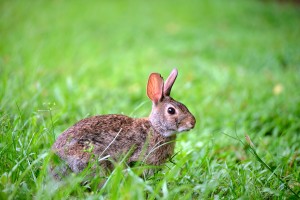
Hunting activity and extensive livestock can be decisive elements for the stability of faunal biodiversity and the persistence of endangered species, as well as a complementary element in the income of the mountain.Good grazing management pursues fire prevention, the maintenance over time of productive use, so it must tend to improve the natural fertility of the land and the conservation and improvement of biodiversity, must avoid at all times the appearance of any sign of erosion, pollution or overgrazing.
Thehunting landsare those in which hunting is allowed, and are classified as Lands subject to the common regime and Lands subject to a special regime.
The lands subject to the common hunting regime are those spaces in which the exercise of hunting can be carried out without further limitations than those established in Law 13/2013, of December 23, on hunting in Galicia, and other applicable regulations.
Hunting lands subject to a special regime are those in which the exercise of hunting is limited to those who hold hunting ownership over them: Tecores (ordered hunting lands), Hunting Reserves, Hunting-sports lands and commercial hunting exploitation.
Regarding the hare, in the year 2022, its hunting is only authorized in the working period between October 16 and November 27 on land of special hunting regime.
Non-hunting lands , are those in which, by express declaration of the Hunting Law or by resolution of the competent council, the prohibition of hunting is established, and are classified as: Wildlife refuges, inhabited areas, industrial areas or other non-hunting lands that are declared as such.
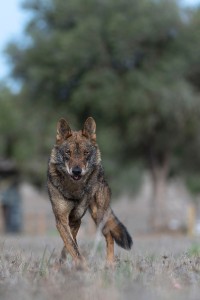
The Iberian wolf (Canis lupus) has been included in the List of Wild Species under Special Protection Regime (LESPRE) in September 2021, so its hunting is prohibited.
The LESPRE includes those species, subspecies and populations that are worthy of particular attention and protection based on their scientific, ecological, cultural value, singularity, oddness, or degree of threat, as well as those that appear as protected in the annexes of the regulations of the European Union and international treaties ratified by Spain.
In Leboreiro, you will be able to observe elements that speak of the traditions of the area, such as an “hórreo” located in front of the old pilgrims’ hospital, made with intertwined rods, reminiscent of the old barns called “celeiros” where the crops, mainly corn, were stored. Of the pilgrims’ hospital, only two walls with the coats of arms of the Ulloa family are preserved.
You can also visit its Gothic church, with a collection of religious-themed sculptures from various eras and styles, as well as a Renaissance mural painting.
FORESTRY TRAINING
The forestry sector is booming, and the demand is increasing to cover different positions from engineers, carpenters, operators, foremen, administrative staff, etc., and for this there is a wide training offer both regulated and non-regulated teachings in Galicia.
The Escuela de Ingeniería Forestal (School of Forest Engineering) in Pontevedra or the Escuela Politécnica Superior de Ingeniería (Higher Polytechnic School of Engineering) in Lugo train students to carry out tasks related to the management, conservation and exploitation of natural and forest spaces; carry out hydrology, reforestation and soil conservation works; hunting and fishing management; knowledge about the treatment and industrial use of wood and its products, the development of renewable energy generation projects from forest biomass, quality control of forest products; the design and finish of the furniture; the development of projects for the installation of forest industries; carrying out forestry technology research and development projects, etc.

There are Agricultural Training and Experimentation Centres, and technical degreessuch as that of the professional group of wood, furniture and bark such as carpentry and furniture, processing and transformation of wood or design and furnishing.
The Dual T&D, is a vocational training and development modality that aims to professionally qualify people in a regimen of alternating work activity in a company with training activity in an educational center. Centers and companies share training responsibilities so that professional education is adapted to the needs of the working market.
Many of the Galician forestry companies that have PEFC forestry certification actively collaborate in the dual T&D modality.
Different entities of the Galician forestry sector organize year after year specific courses for the continuous training of workers in the forestry chain.
In this section, we must mention initiatives as interesting as the training cycle of Custom Manufacturing and Installation of Carpentry and Furniture of the IES de Melide, , which produced a digital glossary with terminology of the professional group of carpentry and furniture, adapted to sign language and was distinguished by the Conselleria de Educación (Ministry of Education) with the the first Good Practices Award for Inclusive Education.
The catalogue has two hundred words that are presented in Galician and Spanish, but it is not the only project with which the Melide High School stands out in inclusive education, as they also designed a work table adapted to people with reduced mobility.
The role of PEFC
Maintaining or increasing the forest area, especially the wooded area, except for forest defense actions (fires), adaptations to current legislation or others aimed at improving its multifunctionality, is one of PEFC’s objectives. It is essential that this area is orderly, which will allow forest owners and managers to properly plan and schedule the work to be carried out on their forests.
Maintaining or increasing the forest area, especially the wooded area, except for losses due to actions to defend the forest (for example, fires), adaptations to current legislation or others aimed at improving its multifunctionality, is one of PEFC’s objectives.
We can keep and increase the wooded forest surface, reforesting and restoring the cover, especially in the most degraded areas, through the use of species and forestry techniques appropriate to the season, and improve the structure of the existing forest masses, promoting management and forestry.
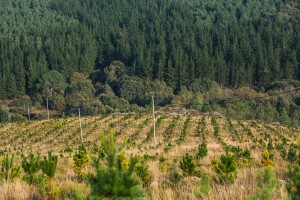
It is essential that this surface is ordered. Management plans, which allow forest owners and managers to properly plan and schedule the work to be carried out on their forests, and so obtain profit on the forests while guaranteeing their regeneration.
Hunting activity and extensive livestock can be decisive elements for the stability of faunal biodiversity and the persistence of endangered species, as well as a complementary element in the income of the mountain. Good grazing management pursues fire prevention, the maintenance over time of productive use, so it must tend to improve the natural fertility of the land and the conservation and improvement of biodiversity, must avoid at all times the appearance of any sign of erosion, pollution or overgrazing.


Beneficiary project of the program “O teu Xacobeo” from the Xunta de Galicia