


After traversing mountains, hills, and small villages, arriving in Lugo transforms the landscape of the Primitive Way. City streets, buildings, and urban bustle appear, yet nature does not vanish; it remains present in the rivers, parks, trees, and green spaces that run through and surround the urban environment.
The forest also enters the city in less obvious ways. It is found in the wood of a piece of furniture or a musical instrument, in the fibers of a basket, in the pages of a book, and in numerous products we use every day. Behind them lie natural resources, but also knowledge, planning, craftsmanship, and the people capable of transforming raw materials into useful, durable objects imbued with culture.
Lugo allows you to discover all these connections. The Way winds through a city built upon its history, integrated into a Biosphere Reserve and linked to the mountains through science, craftsmanship, culture, and our own choices. The landscape changes, but the relationship with the forests endures.
LUGO, KM 100
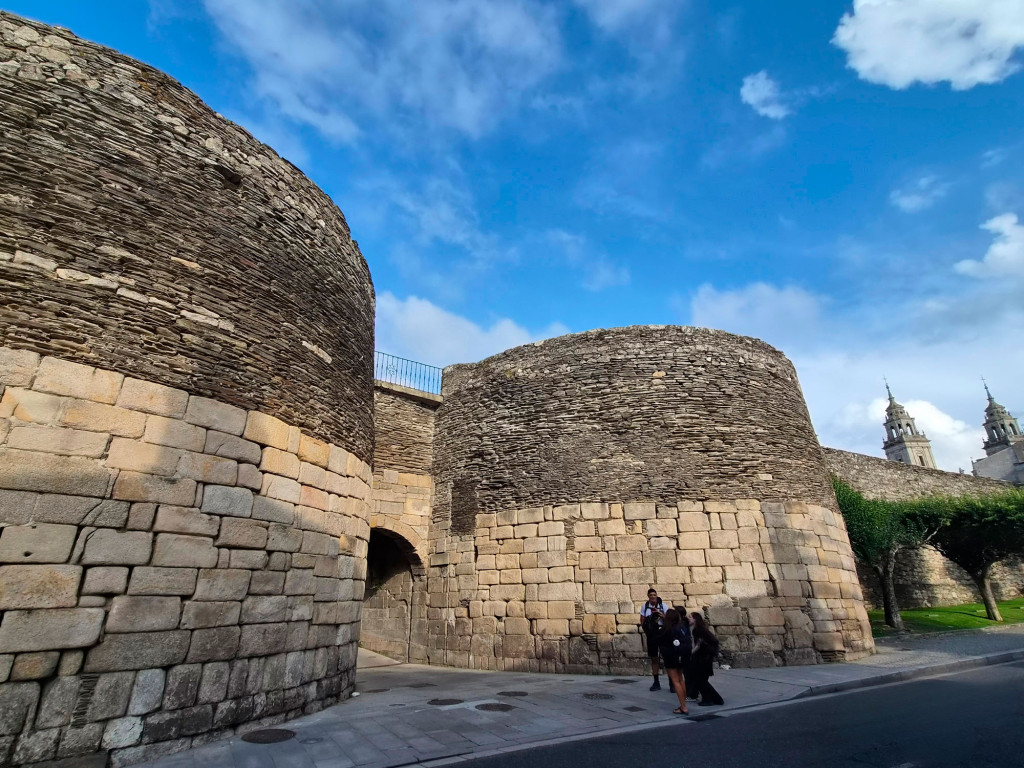
The Primitive Way enters Lugo by descending into the A Chanca valley, an area where water, vegetation, and the lay of the land still accompany the pilgrim before they reach the city center. Rising above the landscape is the A Chanca railway viaduct, a series of large arches that recalls the arrival of the railway and the transformation of transport and communications during the 19th century. Also located near the route is the Fonte da Chanca, a testament to the vital role that springs and fountains played in daily life for generations.
The railway opened up new uses for materials sourced from the forest. Wood was used to manufacture sleepers due to its strength, elasticity, and ease of both working and replacement. Although concrete sleepers now make up a large part of the network, wooden ones continue to be used in specific sections and in certain railway components. They are another, often inconspicuous, example of how forest resources have accompanied the development of infrastructure and modes of communication.
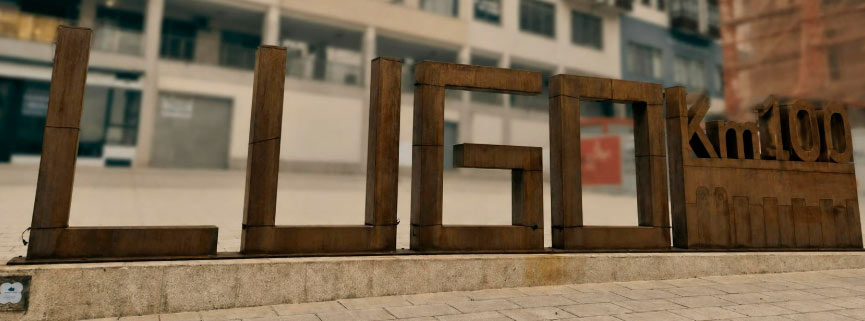
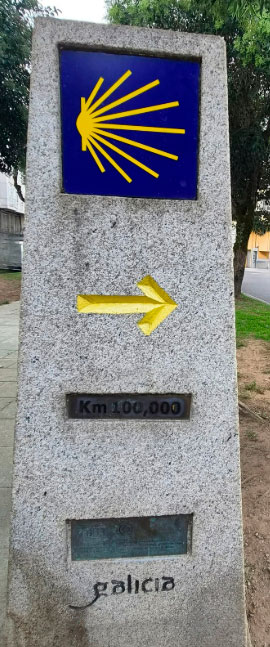
After passing through A Chanca and ascending toward the city, the pilgrim encounters the large letters LUGO KM 100, which have become one of the most recognizable images of the entrance to Lugo. Nearby, an official milestone marks the point from which one hundred kilometers remain to Santiago de Compostela.
Reaching this place holds special significance. For those walking from Asturias or A Fonsagrada, it marks the beginning of the final leg of the pilgrimage. For others, Lugo can serve as the starting point, as a continuous 100-kilometer walk along a recognized route meets the minimum distance requirement to apply for the Compostela, provided all other established conditions are met.
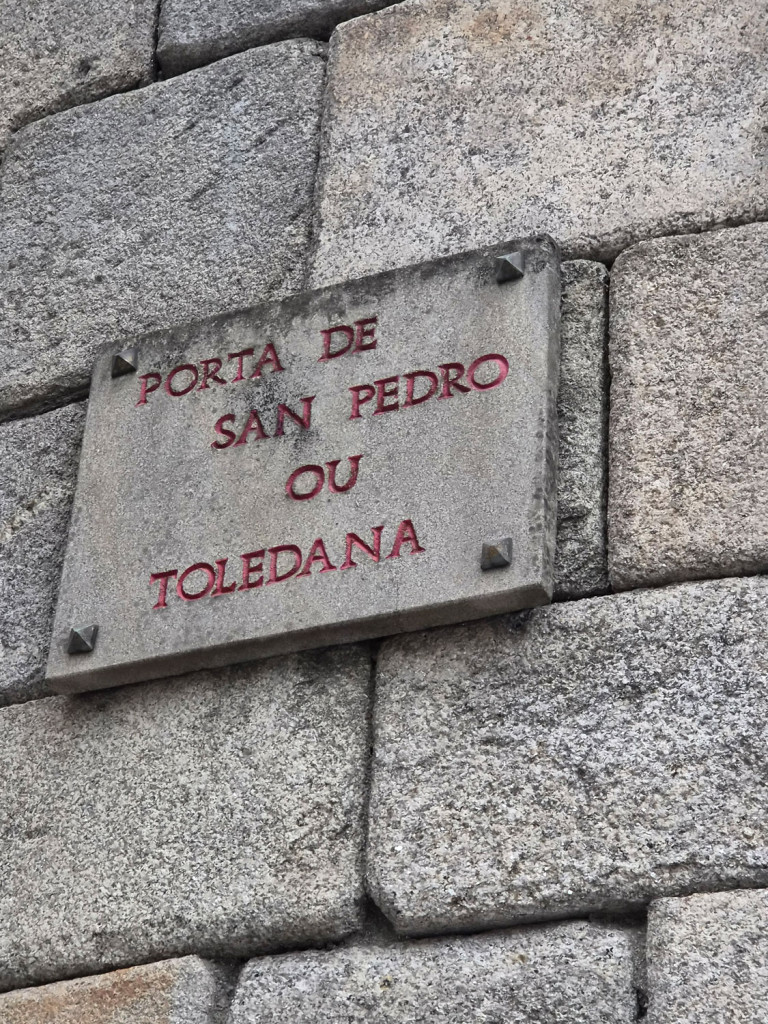
The Way continues along Carril das Flores until it reaches the Roman wall. Entry into the historic precinct is through the Porta de San Pedro, one of the gates that existed as far back as Roman times and was used for centuries to access the city from roads coming from the south and east. Passing through it allows one to repeat a gesture made by travelers, merchants, and pilgrims across vastly different eras.
Rúa de San Pedro leads to the Praza Maior, the hub of urban life. The Town Hall, one of the finest examples of Galician civic Baroque architecture, is located there. In the square’s landscaped area stands the Arco de Triunfo (Triumphal Arch), a contemporary sculptural group created by Ramón Conde. The work depicts Emperor Caesar Augustus commissioning his legate, Paullus Fabius Maximus, to found Lucus Augusti. Its bronze figures, installed in 2007, commemorate the city’s Roman origins.
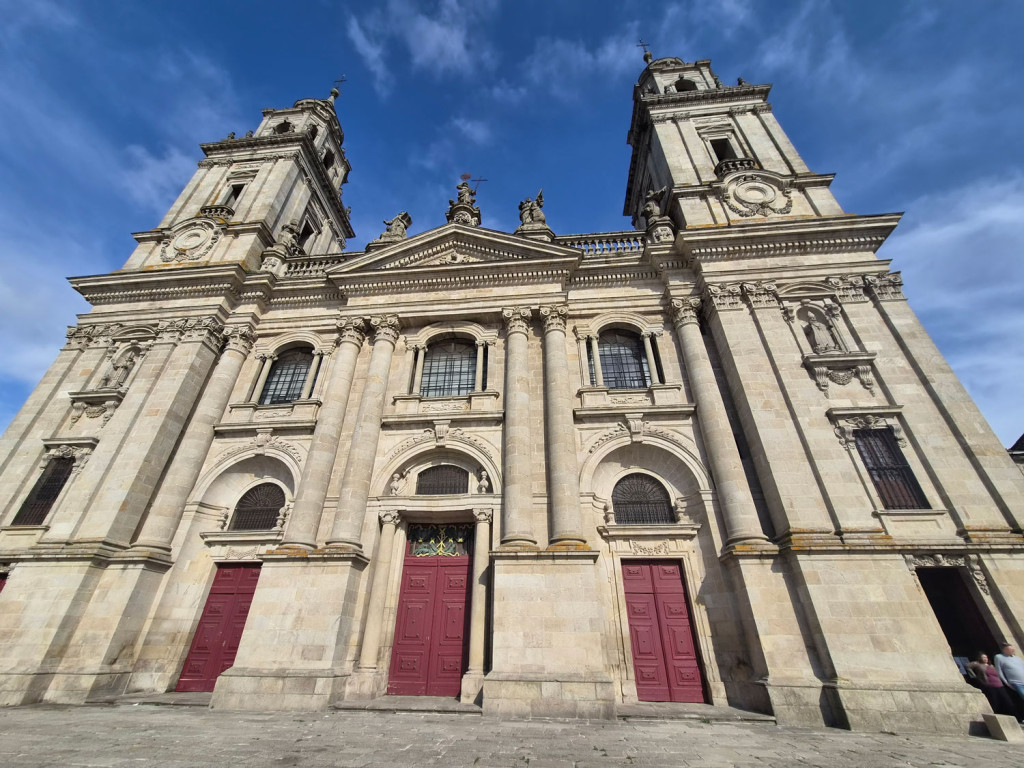
Just a few steps away stands the Cathedral of Santa María, built and transformed over the course of several centuries. It brings together Romanesque, Gothic, Baroque, and Neoclassical elements, alongside the tradition of the perpetual exposition of the Blessed Sacrament, a practice closely linked to Lugo’s spiritual history and to the chalice and host featured on the coats of arms of both the city and Galicia.
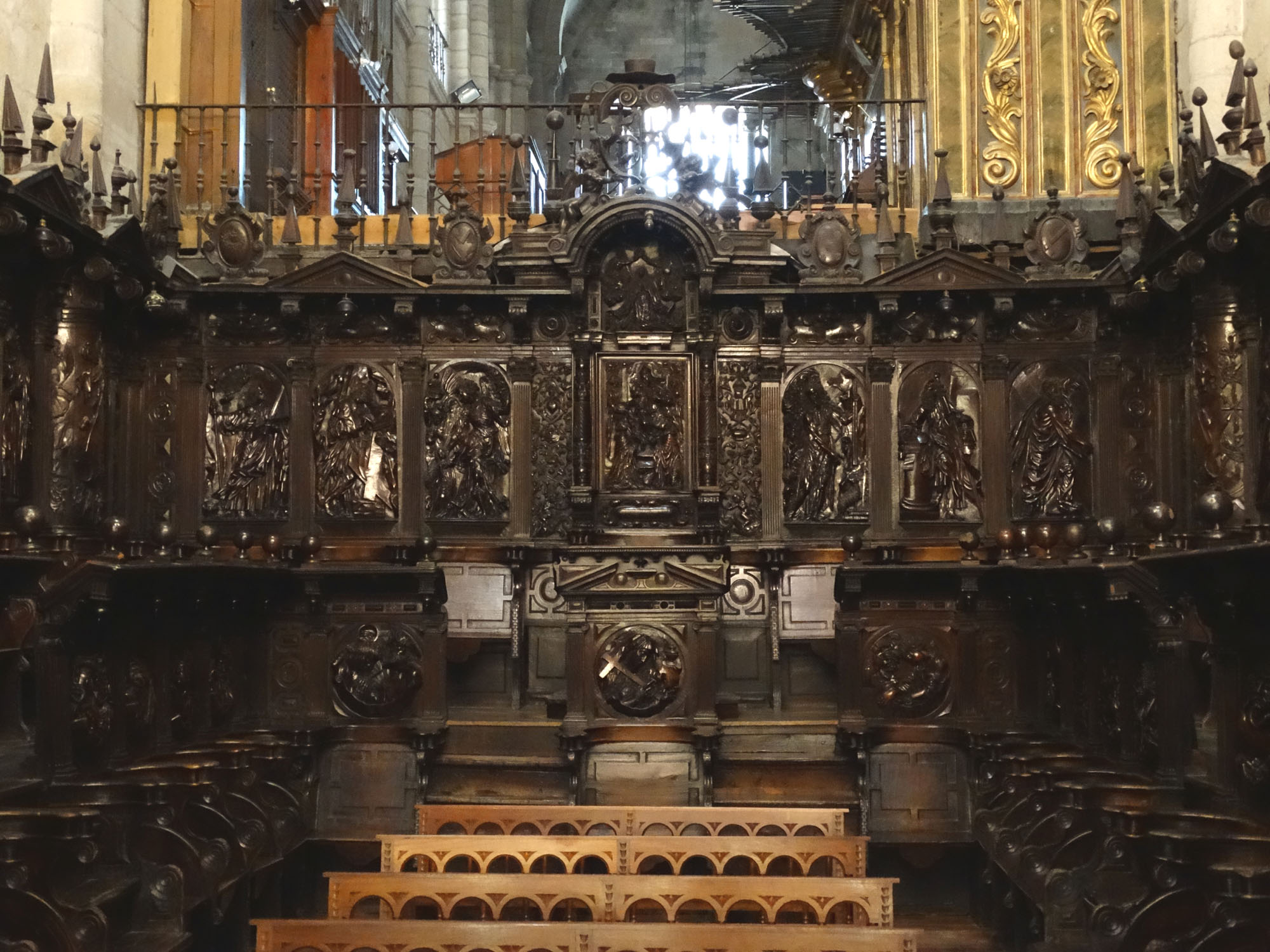
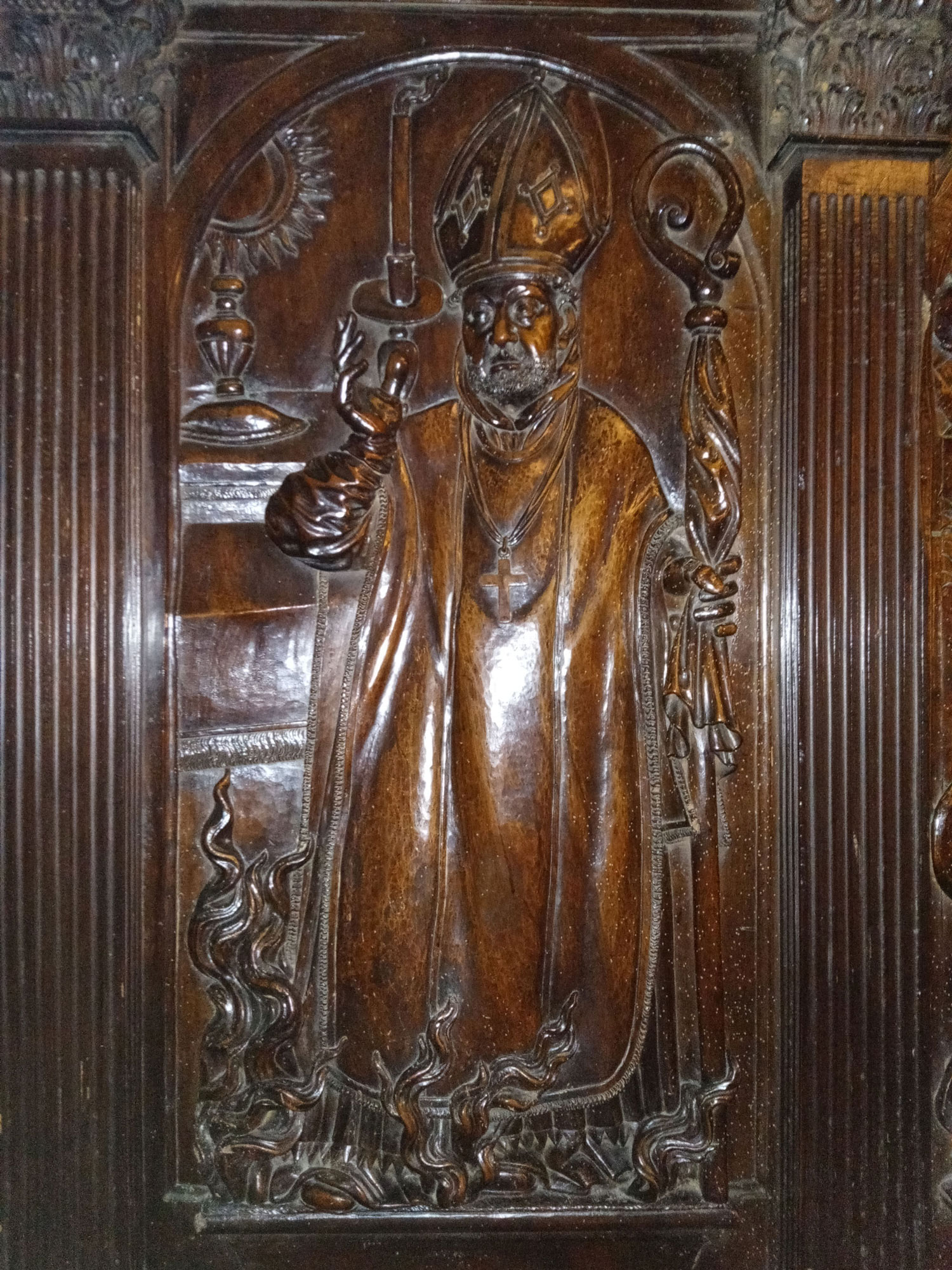
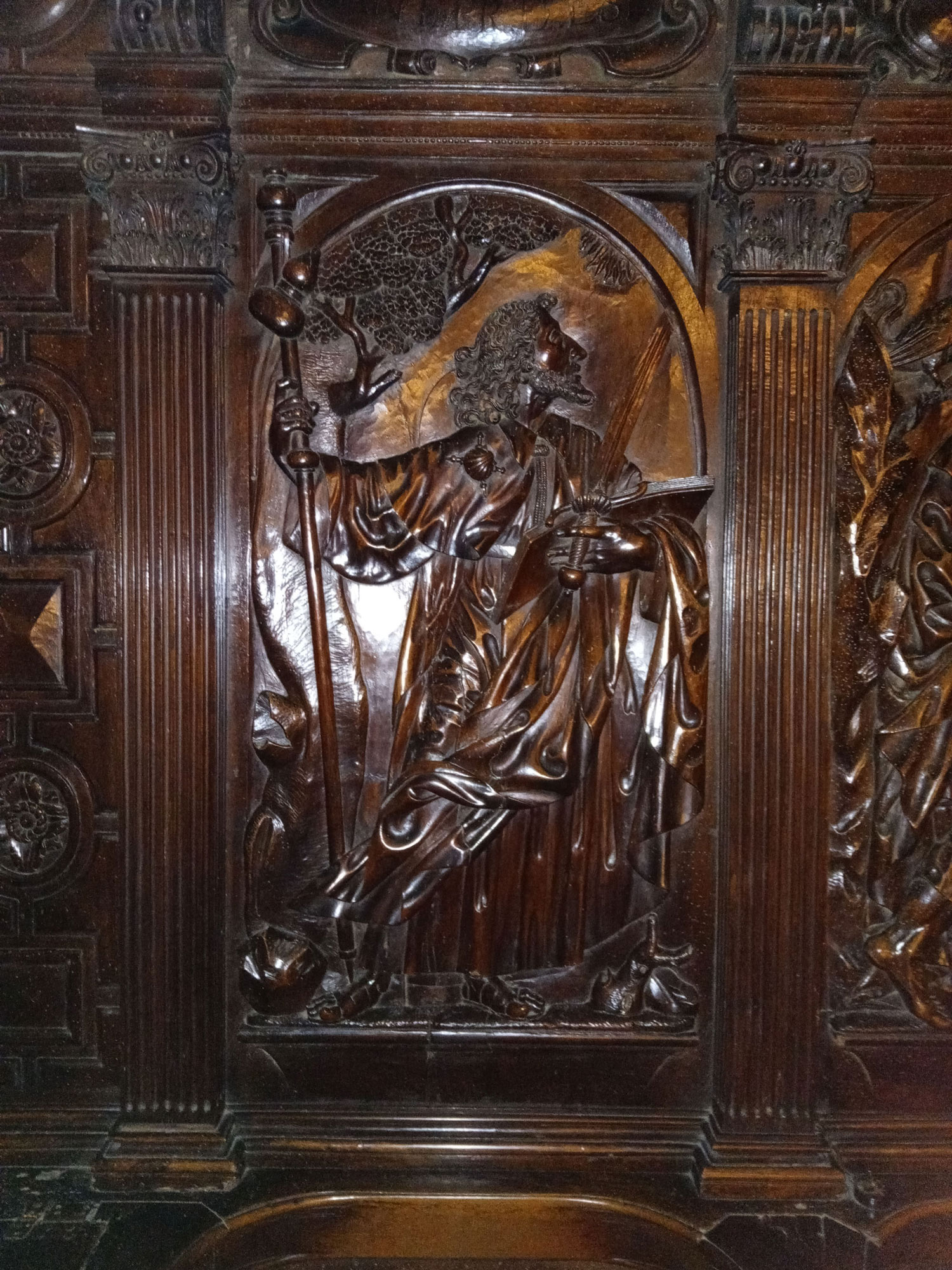
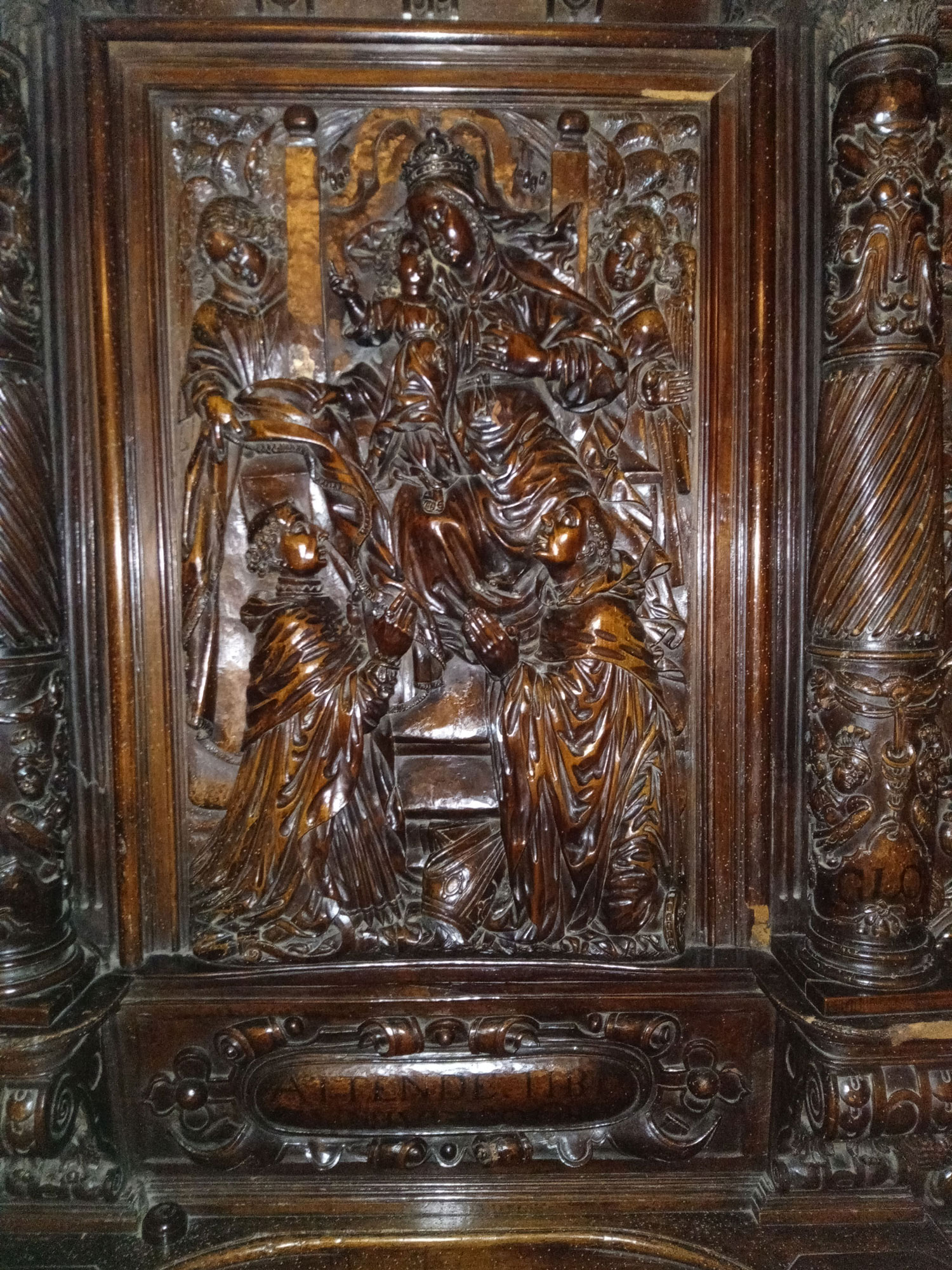
Inside, wood also forms part of that heritage. The choir stalls, crafted by Francisco de Moure between 1621 and 1624, are carved from walnut and feature dozens of seats adorned with figures, scenes, and naturalistic motifs. Their survival after four centuries demonstrates how a material derived from a tree can be transformed, through knowledge and craftsmanship, into a work capable of enduring across generations.
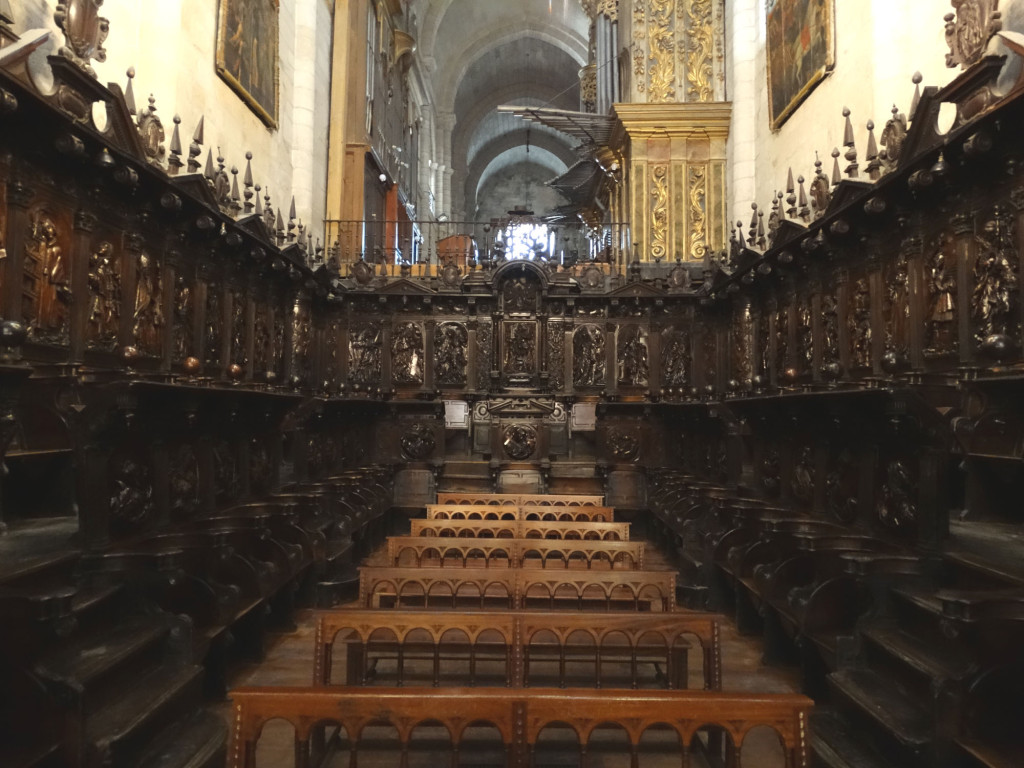
Imaxe cedida pola Catedral de Lugo.
From the cathedral, the Way offers two options for leaving the walled enclosure. One allows pilgrims to exit via the Porta de Santiago, located opposite the temple’s neoclassical façade, and descend along Rúa de Santiago. The other leads to the Porta Miñá or Porta do Carme, the Roman gate that has best preserved its original layout and whose orientation toward the river explains its name. Both routes eventually connect with the Calzada da Ponte.
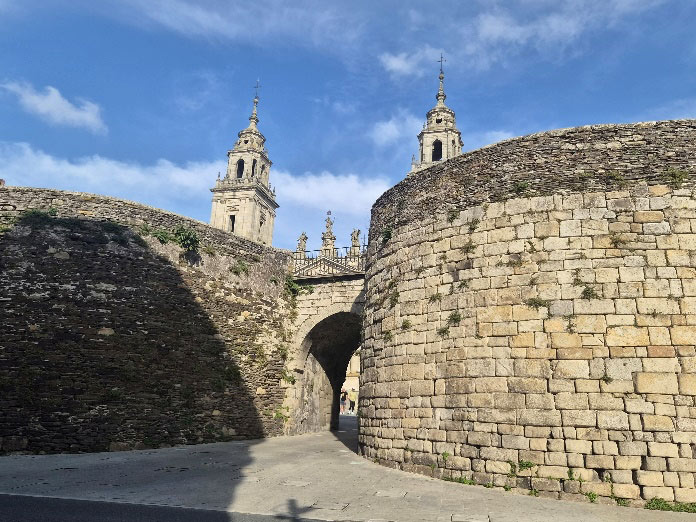
Imaxe Porta de Santiago
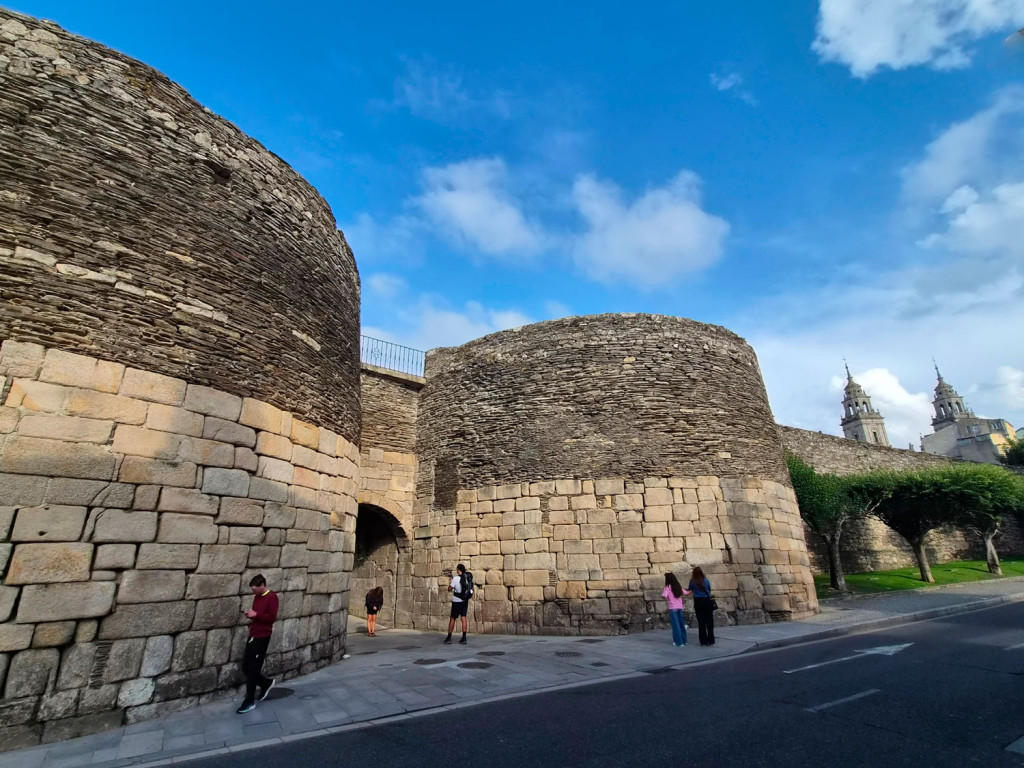
Imaxe Porta Miñá ou Porta do Carme
From Porta Miñá, the route descends toward the river, following the path of an ancient Roman road that connected Lucus Augusti with the Miño. The Primitive Way follows this same route until it reaches the Roman bridge. Although renovated at various times, the bridge continues to serve its age-old function as a crossing point, allowing walkers and pilgrims to cross the river and continue their journey to Santiago.
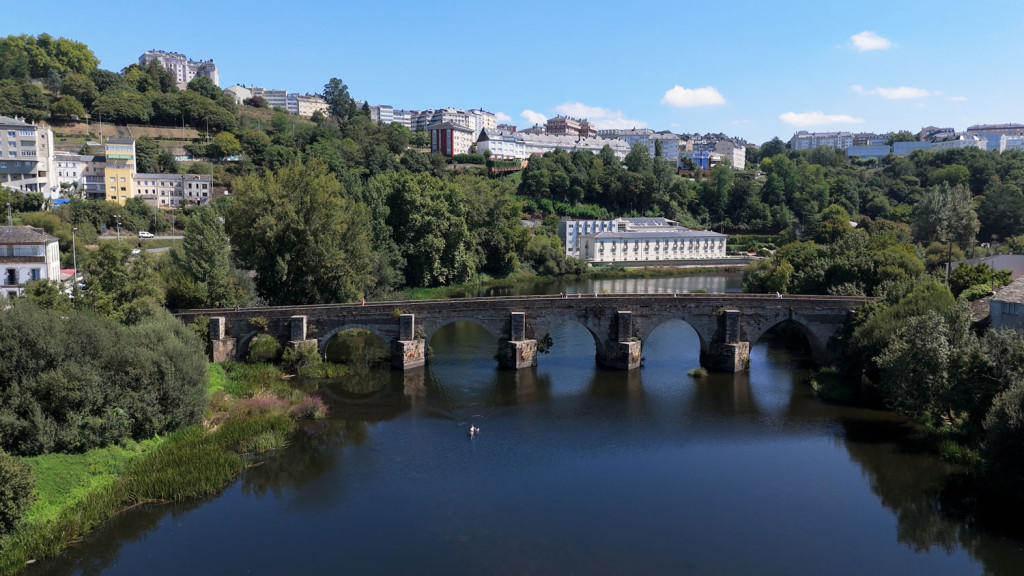
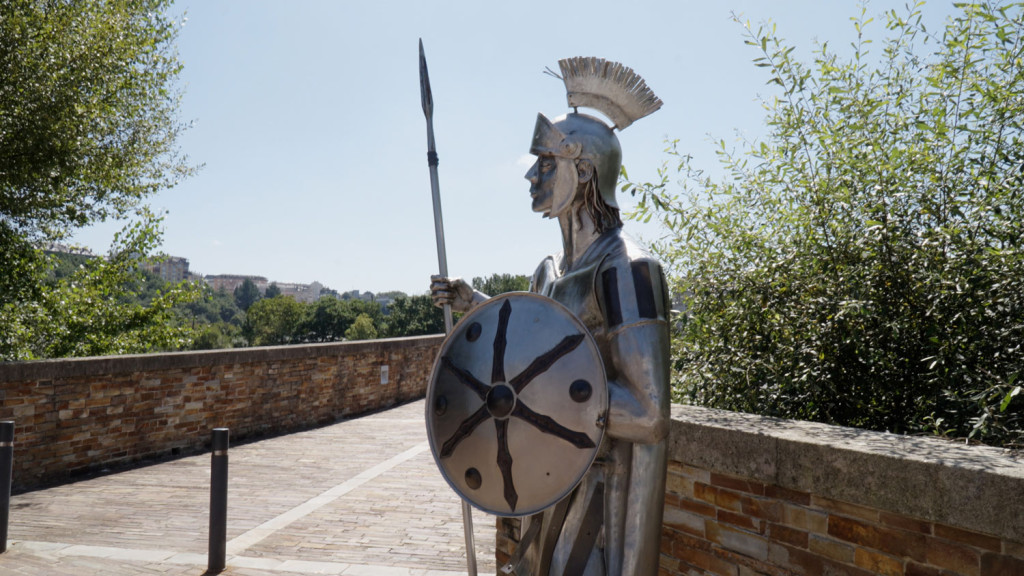
The Roman baths are preserved very close to the bridge, demonstrating how the thermal waters were utilized by the inhabitants of Lucus Augusti. A metal sculpture of a Roman soldier, created during the 2015 Arde Lvcus festival, is also located there. With his spear and shield, the figure appears to stand guard over the crossing, serving as a reminder of how the city keeps its past alive through a contemporary celebration.
The route concludes by opening up to the landscape of the Miño River. After traversing streets, squares, monuments, and centuries of history, the pilgrim once again encounters the water, trees, and riverside vegetation. The riverside walk offers a chance to stop, rest, and discover that the river is not merely a boundary to be crossed; it is also a natural corridor, a recreational space, and an essential part of Lugo’s landscap
A CITY IN THE BIOSPHERE
Lugo is part of the Terras do Miño Biosphere Reserve, recognized by UNESCO in 2002. Moreover, it is the only provincial capital in peninsular Spain included in a biosphere reserve.
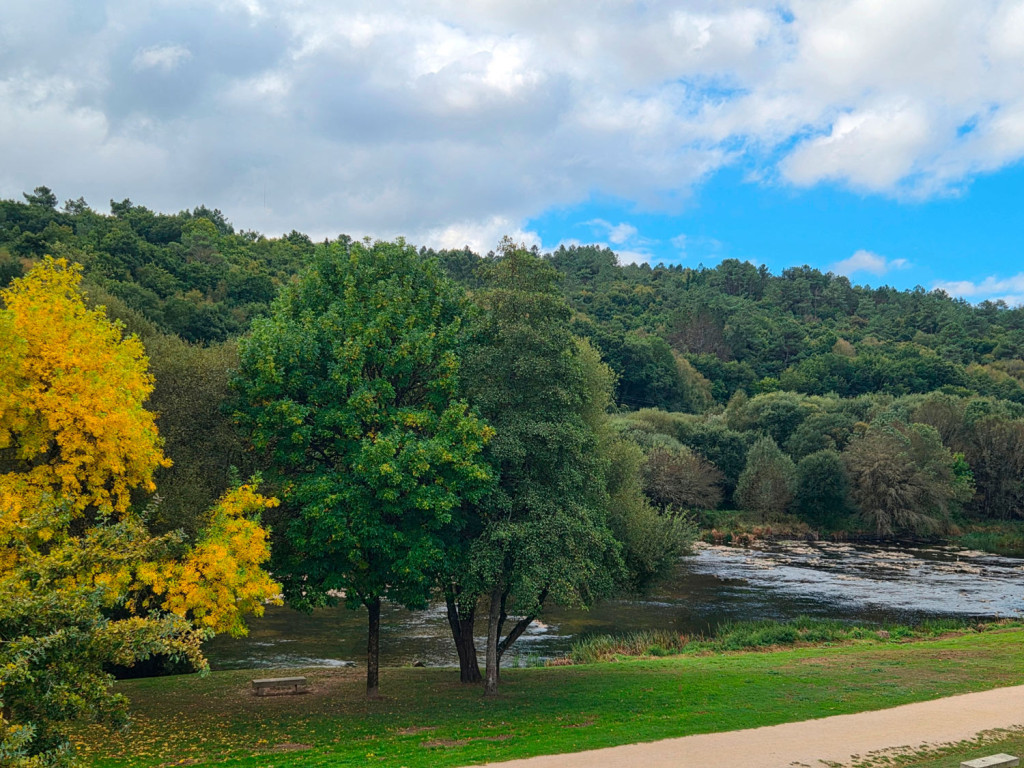
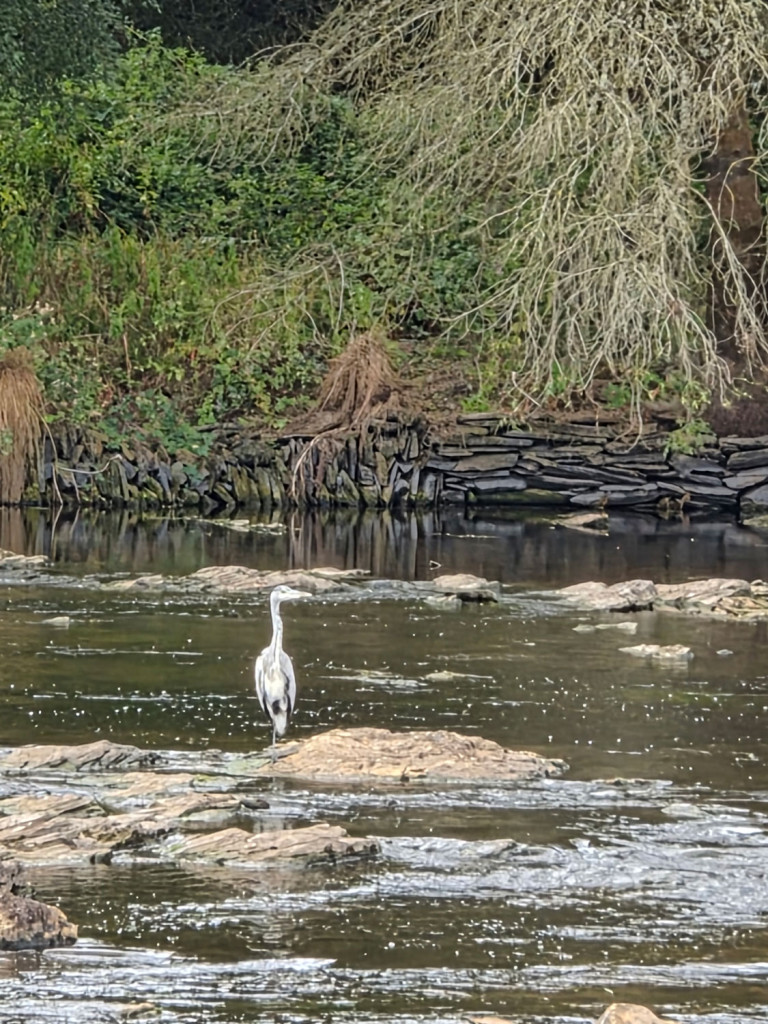
The Miño River and its network of tributaries form the central axis of this territory, which comprises forests, rivers, wetlands, agricultural lands, villages, and urban centers. The Reserve does not aim to separate people from nature, but rather to foster a balanced coexistence between the conservation of natural values, the well-being of the population, and sustainable economic development.
Some of its most valuable areas also benefit from other forms of protection. This is the case with the Parga-Ladra-Támoga ZEC (Special Area of Conservation), part of the Natura 2000 network, which protects a portion of the river system and wetlands of the upper Miño basin.
This relationship between nature and society can be observed within the city itself. The Miño River and watercourses such as the Rato and the Fervedoira connect the urban area with the surrounding landscape. Their riverbanks, along with parks, vegetable gardens, and other wooded areas, form a green and blue network that runs through Lugo. For nature knows no walls: water, trees, and various forms of life continue their course between the rural landscape and the historic city.
Rivers and forests that connect
Rivers are much more than just flowing water. Their channels and riparian vegetation form ecological corridors that connect different habitats and facilitate the movement, feeding, and reproduction of numerous species.
Alders, willows, birches, oaks, and other trees typical of these environments help stabilize the soil and protect the banks from erosion. They also provide shade for the water and offer food and shelter to birds, mammals, amphibians, fish, insects, and many other forms of life that depend on the continuity and healthy condition of these areas.
But this green and blue network also directly benefits people. Trees provide shade, moderate temperatures, and help improve environmental quality. Parks and riverside walkways offer places to walk, rest, exercise, observe nature, or meet other people.
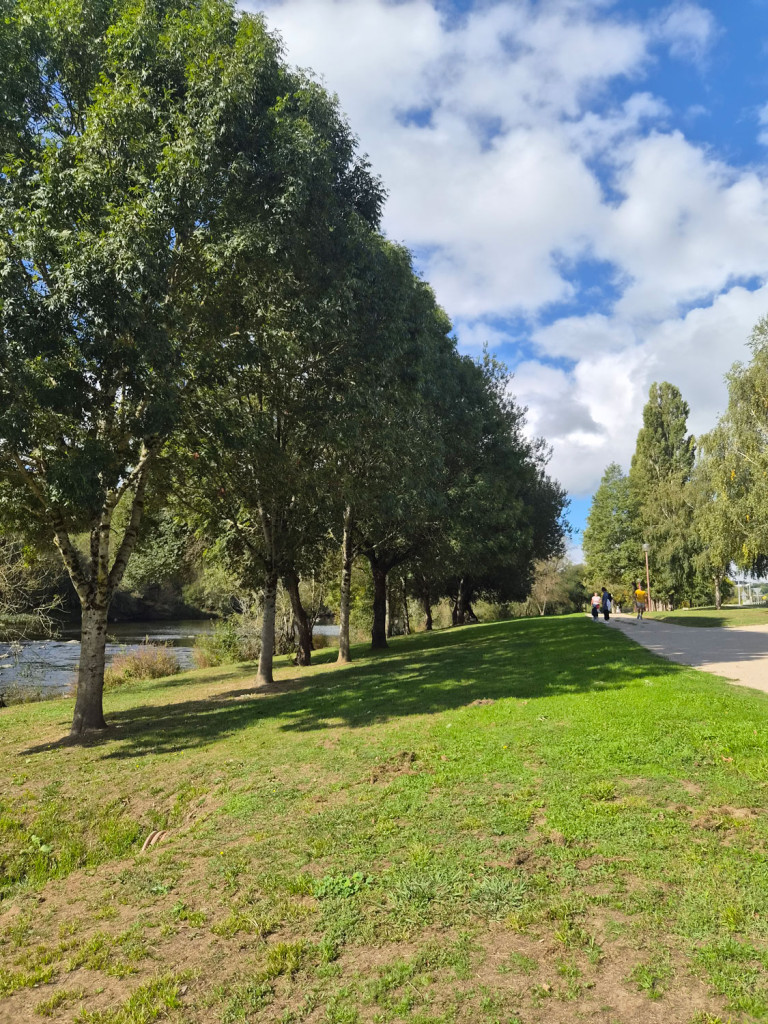
Walks along the Miño also offer access to riverside woodlands without leaving Lugo. Stretching along its banks is the Parque do Miño, one of the city’s major green spaces, featuring wooded areas, rest spots, and paths for walking, exercising, or cycling. In this setting, the Primitive Way crosses the river via the Ponte Vella (Old Bridge); of Roman origin and rebuilt over various eras, the bridge marks the transition between the historic city and the river landscape.
FOREST SCIENCE
A great deal of knowledge lies behind well-tended, productive woodlands prepared to face the future. Before taking action, it is necessary to study the terrain, observe how the vegetation evolves, calculate available resources, and decide which tasks need to be carried out, as well as where and when.
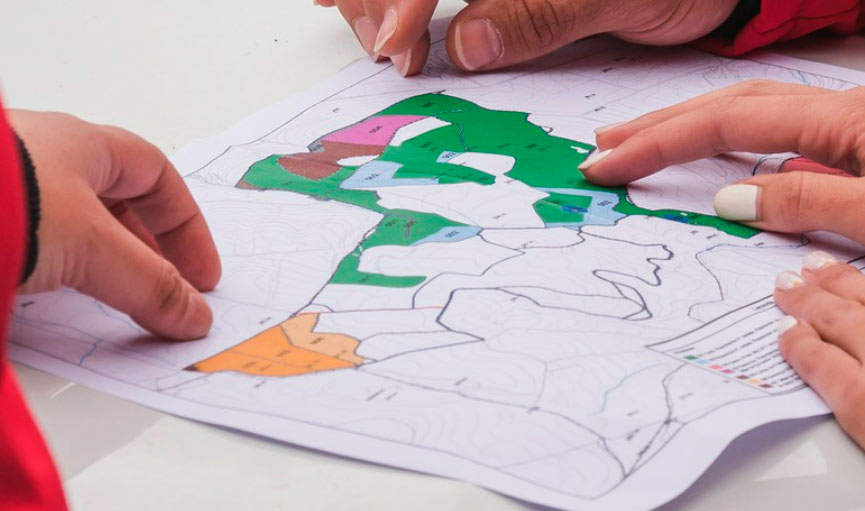
In Lugo, the Higher Polytechnic School of Engineering at the University of Santiago de Compostela trains many of the professionals who carry out this work. It offers the Bachelor’s Degree in Forestry and Natural Environment Engineering and the University Master’s Degree in Forestry Engineering, which provides access to the regulated profession of forestry engineer.
Galicia is also home to the School of Forestry Engineering in Pontevedra, part of the University of Vigo, which offers a Bachelor’s degree in Forestry Engineering. Both institutions train professionals capable of meeting the needs of a region where forests form an essential part of the landscape, the economy, and rural life.
Plan before acting
Managing a forest involves more than just deciding which trees to plant or cut down. First, it is necessary to understand its characteristics, set objectives, and organize activities over time.
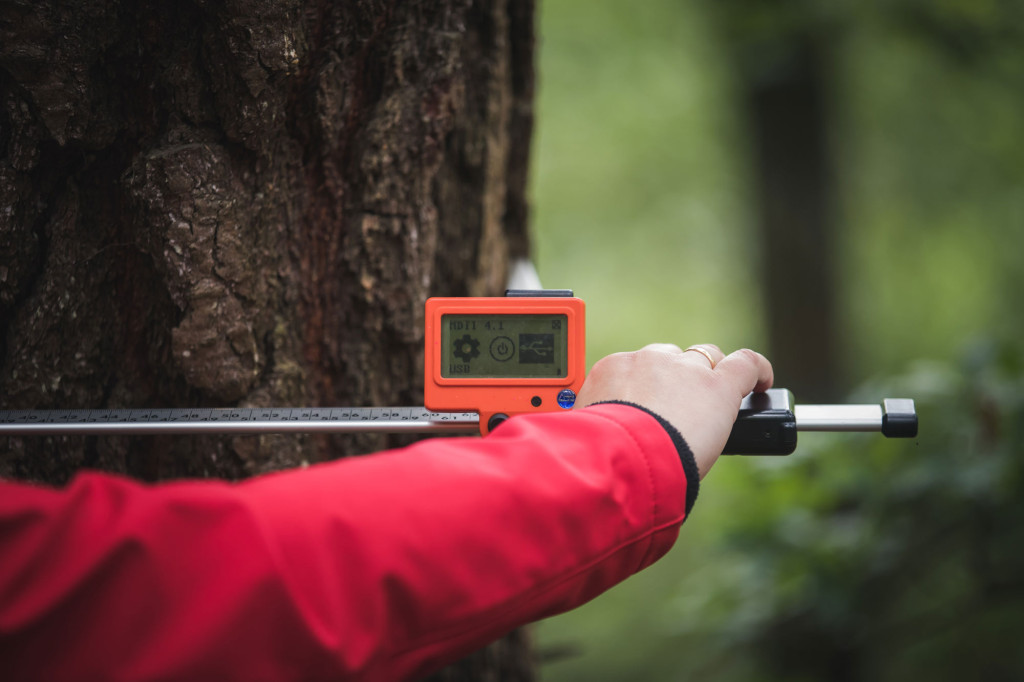
Forestry engineering professionals study the species present, the age and condition of the trees, the land’s productive capacity, biodiversity, watercourses, the risk of erosion or fire, access routes, and potential uses. Based on this information, they can propose natural regeneration, planting, pruning, thinning, and harvesting operations, as well as measures to prevent fires, restore degraded areas, or conserve habitats and features of special value.
This planning is set out in what are known as forest planning or management instruments. Depending on the characteristics and area of the forest, this may take the form of a forest management plan, a simple or shared management document, or another type of instrument recognized by the regulations.
These projects must be drafted by technical personnel with forestry expertise and approved by the forestry authority of the regional administration. They are not documents meant to gather dust in a drawer, but rather roadmaps that help in understanding the forest, organizing investments and resource utilization, anticipating risks, and conserving resources for the future.
From design to the field
The work of these professionals continues after the planning stage. They can supervise forestry operations, advise landowners and forest communities, conduct inventories, value timber and other resources, design infrastructure, restore land, and work on fire prevention and suppression.
They also work in harvesting and processing companies, forestry associations, consultancies, research centers, public administration bodies, and organizations linked to nature conservation.
Their work requires striking a balance. A single forest can produce timber, protect soil and water, sequester carbon, harbor biodiversity, provide recreational spaces, and generate income for its owners. Planning makes it possible to organize these objectives and prevent immediate decisions from compromising future possibilities.
Verify that it is done correctly
Forestry engineering also plays an important role in certification. To obtain PEFC certification, a forest must have the appropriate management plan in place and demonstrate that its management meets the requirements of the Spanish PEFC Forest Certification System.
An independent certification body reviews the documentation and verifies on-site whether management complies with those requirements. Audit teams must possess the qualifications, forestry knowledge, specific training, and professional experience established for performing this function.
During an audit, documents are reviewed, the forest is visited, and evidence is sought to confirm that planned activities are actually being implemented. Based on the results, the certification body decides whether to grant or maintain the certificate.
The confidence conveyed by the PEFC label thus rests on two distinct yet complementary tasks: the work of those who study and plan forest management, and the independent verification that such management is carried out sustainably.
WHEN WOOD BECOMES CULTURE
Forest resources are not transformed solely into materials for construction or the manufacture of industrial products. In the hands of an artisan, wood, paper, or plant fibers can be turned into a piece of furniture, a book, a basket, a sculpture, or a musical instrument.
Lugo boasts a particularly interesting place to discover this relationship: CENTRAD, the Center for Craftsmanship and Design of the Lugo Provincial Council. Workshops are held there focusing on book arts, artisanal furniture making, instrument making, basketry, upholstery, and traditional costumes. It also houses a significant collection of musical instruments and sound-producing objects.
Craftsmanship begins with a deep understanding of materials. Not all woods share the same hardness, flexibility, weight, texture, strength, or acoustic qualities. Knowing how to select, dry, and work with them makes it possible to harness their qualities and create objects capable of serving their purpose for a long time.
This knowledge has been passed down through generations, but it does not belong solely to the past. Artisanal crafts also involve research, design, and the combination of traditional techniques with new tools and contemporary forms.
Repairing, restoring, and crafting durable objects also allows for a more efficient use of resources. A piece of furniture that can be maintained, repaired, and passed down avoids quickly becoming waste and preserves the labor, knowledge, and raw materials that went into its creation.
Resonant wood
Wood can also be transformed into sound. Instruments such as bagpipes, hurdy-gurdies, flutes, drums, and other traditional pieces depend on the properties of the materials from which they are made.
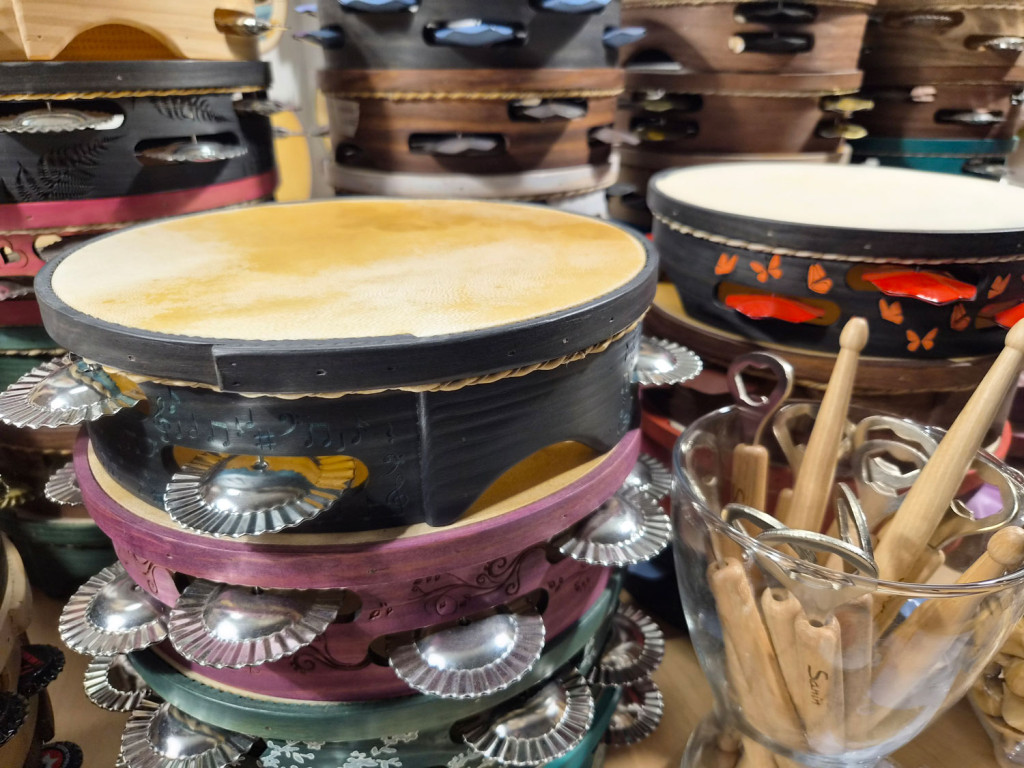
Species, density, grain orientation, drying, and the way each piece is worked can all influence its strength, vibration, and sound. The instrument is thus the result of the coming together of nature, technique, sensitivity, and experience.
CENTRAD’s collections and workshops help preserve this heritage, research its history, and keep alive the knowledge required to build and restore instruments. Within them, a piece of the forest is transformed into music, becoming part of celebrations, dances, memories, and shared emotions.
From tree to book
Among the many products derived from forest resources, paper plays a very close role in our daily lives. It is found in books, notebooks, newspapers, drawings, documents, boxes, labels, and packaging.
Its primary raw material is cellulose fiber, which can be derived from wood or recovered paper. When responsibly sourced and properly used, paper is a renewable and recyclable material capable of replacing certain products made from fossil-based resources.
When paper becomes a book, it also acquires cultural value. Its pages make it possible to preserve knowledge, stories, and experiences, to pass them on across generations, and to carry them far beyond the place and time in which they were written.
At CENTRAD, the book can be discovered not only as a work to be read but also as an object created and preserved through various crafts. Its Obradoiro do Libro (Book Workshop) is dedicated to promoting the arts associated with book production, binding, and restoration, skills that have enabled the protection of documents and the extension of the lifespan of books throughout history.
Its educational activities include introductory and artistic bookbinding, the restoration of graphic works, gilding, artisanal papermaking, printing with lead type and letterpresses, wallpaper production, and the creation of artist’s books. Mobile workshops are also conducted to bring these techniques to educational centers across the province.
In this space, sheets of paper are folded, sewn, and gathered; covers protect their contents, and letters leave their mark through ancient printing techniques. The book thus emerges as the result of a union between material, knowledge, skill, and creativity. It can also be restored when the passage of time has damaged its pages or binding, thereby extending its life and preserving the history it holds.
CENTRAD also houses a library with thousands of volumes that are part of the Galicia library network. Alongside this, it maintains specialized documentary and bibliographic collections linked to its collection of musical instruments, contributing to the study and dissemination of traditional music and instruments.
From the fiber used to manufacture the paper to the hands that bind, print, or restore its pages, every book travels along a long chain. Choosing materials from responsible sources ensures that the culture preserved within its pages is accompanied by another equally important story: that of the stewardship of the forest from which its fibers originate.
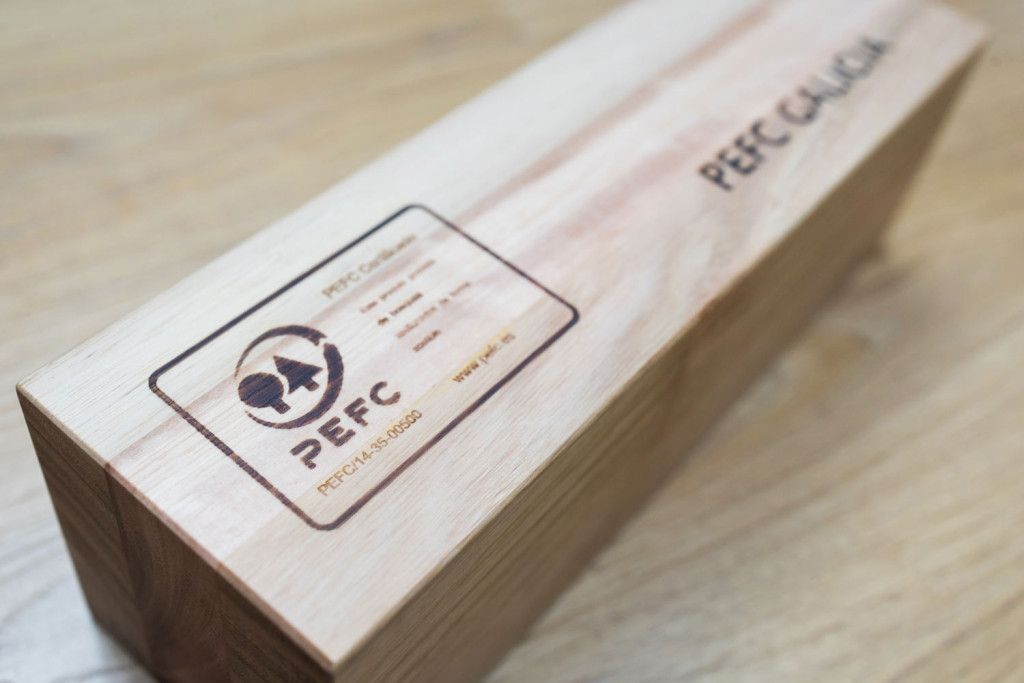
PEFC certification makes it possible to identify books, publications, and other printed products made from materials sourced from sustainable and controlled forests. In this way, a book can convey knowledge while simultaneously demonstrating a commitment to the responsible sourcing of its materials.
Living history
A relación de Lugo co patrimonio faise especialmente visible durante o Arde Lucus, unha celebración que devolve temporalmente as rúas ás súas orixes romanas e castrexas. Campamentos, mercados, desfiles, obradoiros e representacións invitan a imaxinar como era a vida neste territorio hai arredor de dous mil anos.
A recreación permite observar tamén a importancia que tiñan os materiais obtidos da contorna. A madeira, as fibras vexetais, o coiro, a la, a pedra e os metais servían para construír, desprazarse, cociñar, almacenar alimentos e fabricar ferramentas e obxectos cotiáns. Nos postos artesáns e nas escenas recreadas poden recoñecerse algúns destes materiais e as técnicas empregadas para transformalos.
Unha recreación histórica non reproduce necesariamente cada detalle do pasado, pero pode espertar a curiosidade e axudarnos a comprender canto dependeron as sociedades antigas dos recursos naturais. Aínda que hoxe contamos con novas tecnoloxías, seguimos necesitando eses recursos; coñecer os seus usos ao longo da historia invítanos tamén a valorar a súa procedencia e a utilizalos de maneira responsable.
WHAT TO SEE?
The route of the Primitive Way through Lugo offers the chance to visit some of the city’s most iconic landmarks. Many are located directly along the path or just a short distance away, making it well worth stopping to discover the traces left by the inhabitants of Lucus Augusti and the generations that continued to build the city.
A walk along the city walls
Upon passing through the Porta de San Pedro, nearby stairs allow you to ascend to the Roman wall’s walkway. Walking the entire length covers just over two kilometers, though it is also possible to walk only a section and then return to the Way.
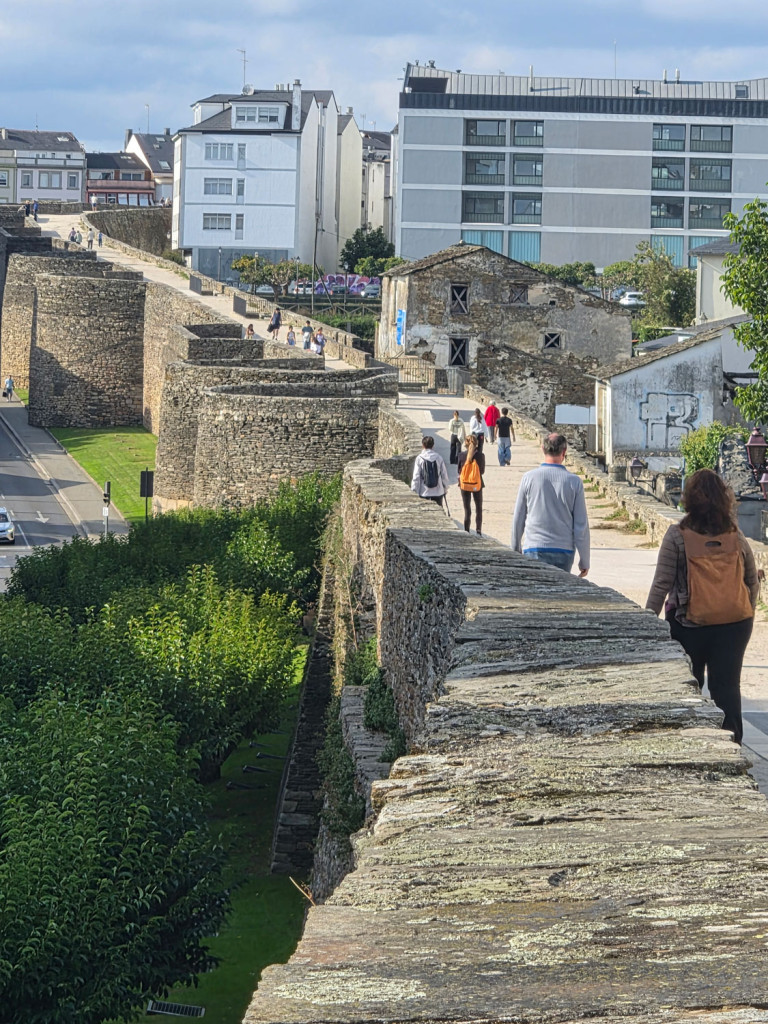
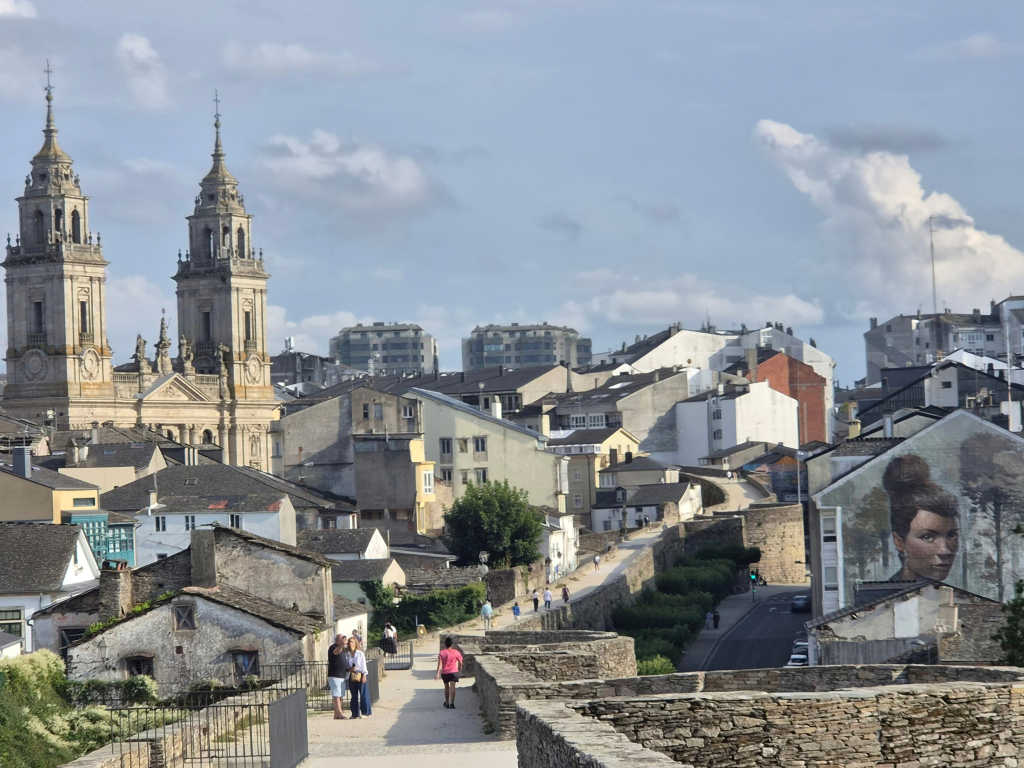
From up high, one gains a different perspective of Lugo. Looking inward, the street layout, squares, and cathedral towers come into view; looking outward, one sees the neighborhoods, green spaces, and the landscape surrounding the city. The wall thus ceases to be perceived merely as a defensive structure and becomes a grand walkway from which to observe how Lugo expanded on both sides of its ramparts.
The route also offers a view of two major works of urban art. The Julius Caesar mural, created by the artist Diego As, from Lugo, pays tribute to the city’s Roman legacy. Near the Porta Miñá stands A Castrexa or Copora, a work by Manuel Pallín (Yoe33) depicting a female warrior inspired by the castro culture that predated Lucus Augusti.
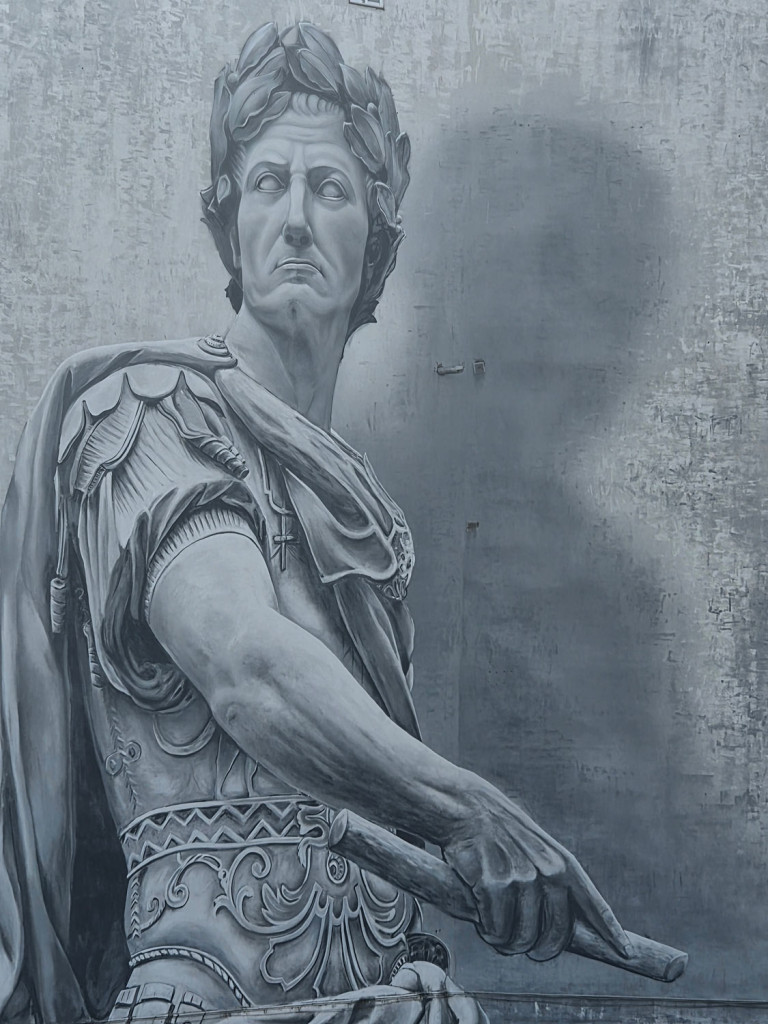
The two figures establish a dialogue between different moments in the territory’s history. Castro culture and Romanization are reinterpreted through a contemporary language, with the wall itself serving as the setting and the link between them.
House of Mosaics
Very close to the Praza Maior, beneath a building on Rúa Doutor Castro, the remains of a large Roman residence are preserved. Its dimensions and decoration indicate that it must have belonged to a person of high status within Lucus Augusti.
The House of Mosaics allows visitors to view floors decorated with geometric and figurative motifs, part of a porticoed courtyard, and the remains of a dining room equipped with an underfloor heating system. These elements help one visualize how the wealthiest residences in the Roman city were organized and inhabited.
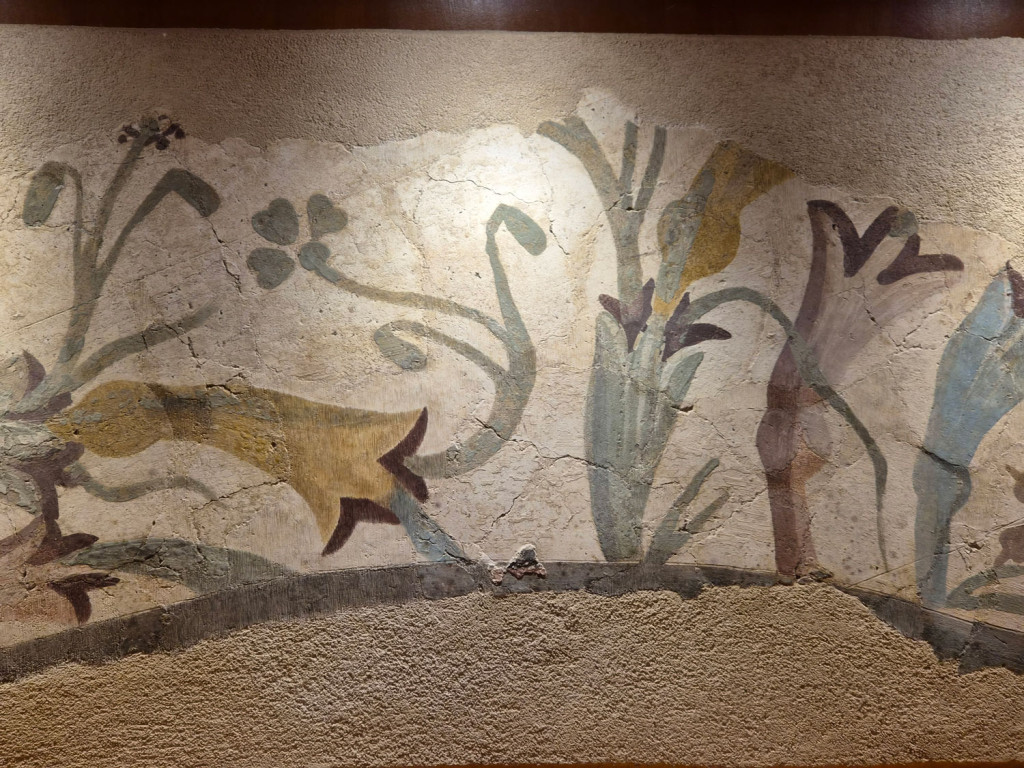
The visit reveals that a significant part of Lucus Augusti remains hidden beneath today’s streets and buildings. Each archaeological excavation opens a small window into the city that still forms part of Lugo’s foundations.
Domus do Mitreo
Next to the cathedral of Lugo, beneath the Casa do Saber of the University of Santiago de Compostela, lies the Domus do Mitreo. The site preserves the remains of a large Roman residence and a temple dedicated to Mithras, a deity whose cult spread across various territories of the Empire.
The space offers insight into aspects of the architecture, domestic life, and beliefs of the inhabitants of Lucus Augusti. It also illustrates how the construction of the city wall altered the earlier urban layout, as part of the dwelling was affected by the new defensive perimeter.
This layering makes the Domus do Mitreo a particularly interesting site: within a single space, one can observe different stages of the city’s history and understand how each generation built upon the traces left by those that came before.
Porta Miñá Exhibition Room
Upon leaving the walled enclosure through the Porta Miñá, you come across a room dedicated to explaining the evolution of the Roman city. It is housed in the former municipal slaughterhouse, a late 19th-century building located right on the Primitive Way route.
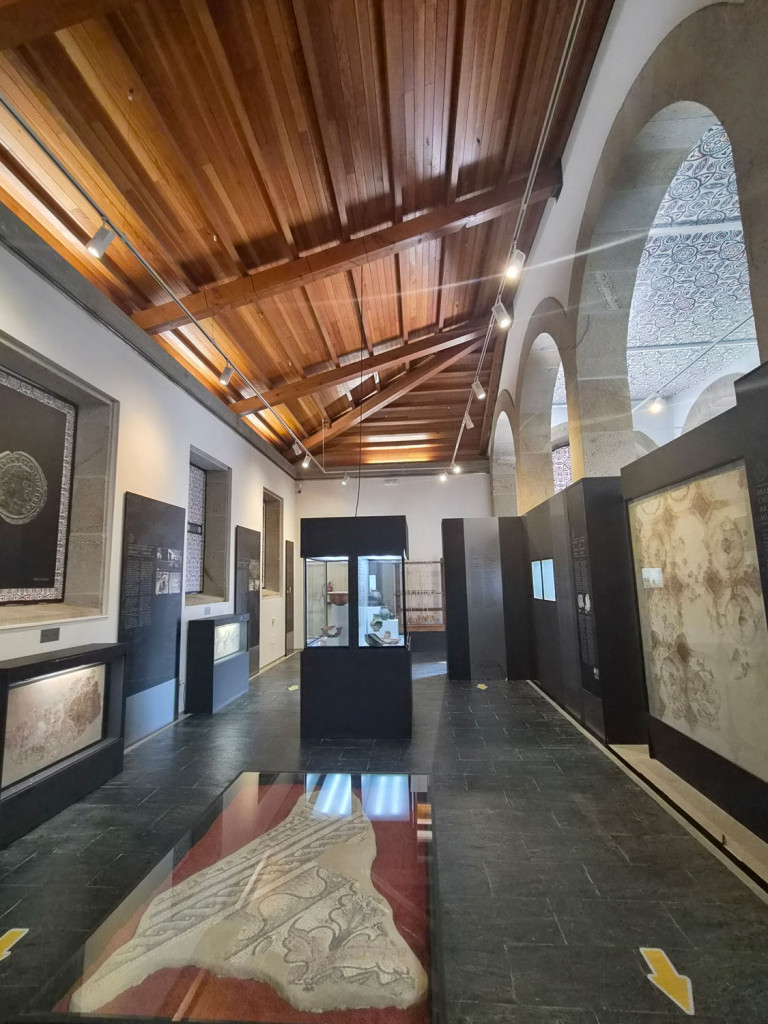
The exhibition combines archaeological artifacts, photographs, plans, and reconstructions to illustrate the birth, growth, fortification, and decline of Lucus Augusti. The objects come from excavations carried out at various sites in Lugo and offer insight into both the city’s organization and the daily lives of its inhabitants. A small section of a Roman sewer can also be seen inside the exhibition hall, providing evidence of the sanitation network that ran through the ancient city and the high level of urban planning achieved in Lucus Augusti.
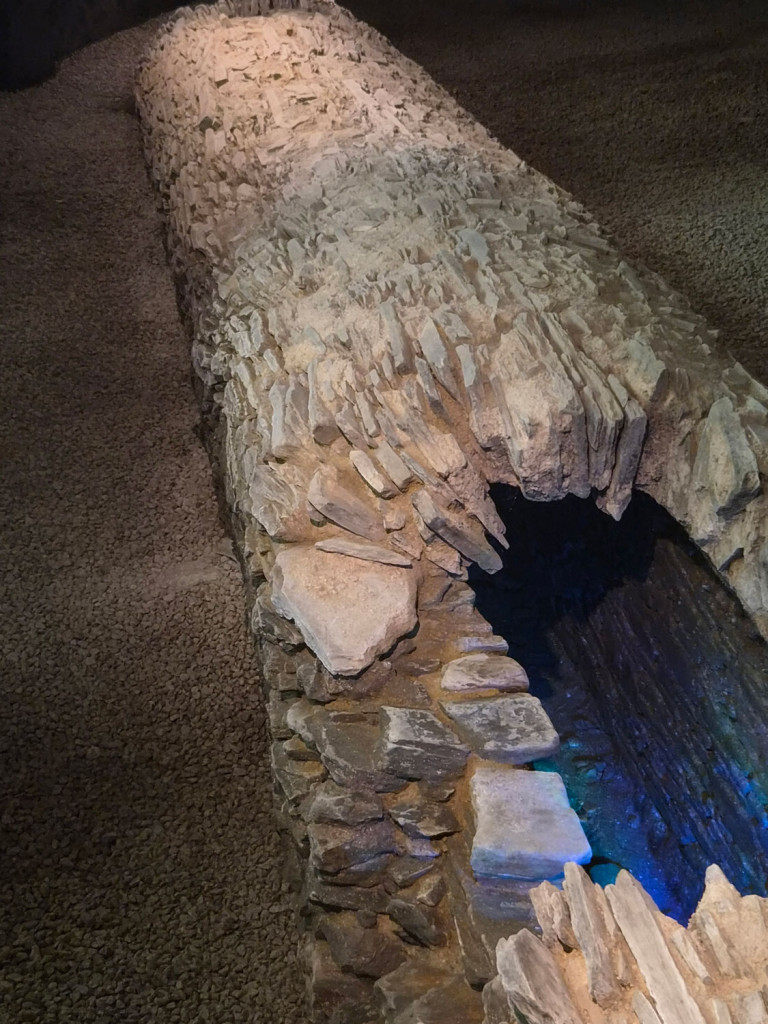
Its location, next to one of the best-preserved Roman gates, helps connect what is explained inside with the city wall and the urban layout that can still be seen outside.
Lugo Provincial Museum
Those with more time can visit the Provincial Museum, housed in part of the former San Francisco convent. The building preserves historic spaces, such as the Romanesque cloister, the refectory, and the old convent kitchen, that are part of the visit itself.
Its collections offer a journey through different stages of the province’s history and culture. They include archaeological artifacts, pre-Roman metalwork, sculpture, painting, decorative arts, and objects related to traditional ways of life and work.
The visit completes the story that begins on the streets of Lugo. The objects preserved in the museum offer a better understanding of the communities that inhabited this territory, the materials they used, the knowledge they developed, and the various ways they transformed available resources into tools, everyday objects, and works of art.
THE ROLE OF PEFC
At first glance, we cannot always tell how a forest is managed or where the wood, paper, or forest fibers in a product come from. Behind them lie decisions regarding resource utilization, biodiversity conservation, soil and water protection, risk prevention, and the future of the land.
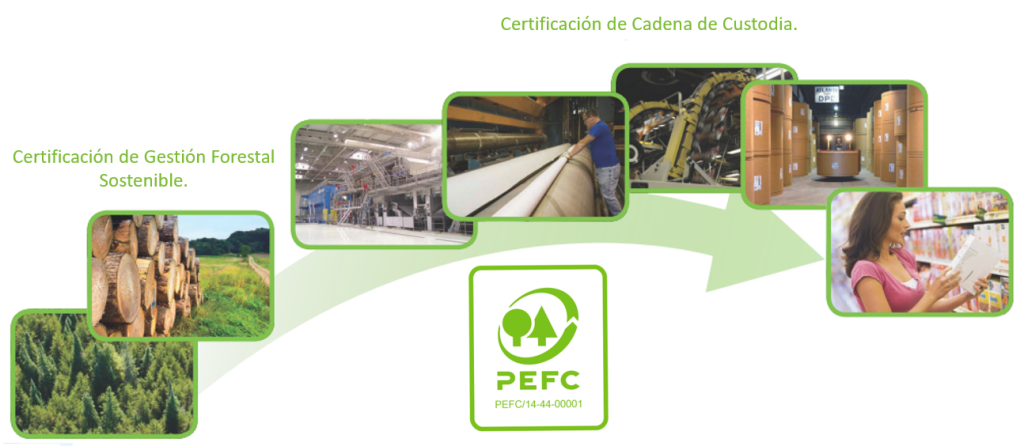
PEFC certification makes this work visible. In the forest, it verifies that management is planned and meets sustainability criteria. Once resources leave the forest, Chain of Custody certification allows the materials to be tracked through the various stages of processing and marketing right up to the final product.
That journey can end with a structure, a piece of furniture, an instrument, a book, packaging, or any other forest-based product. When they bear the PEFC label, we can recognize that their materials come from sustainable and controlled sources, even when we are far from the forest where their story began.
The city is also part of this chain. Choosing certified products, and using, maintaining, repairing, sharing, and recycling them, helps make better use of renewable resources. In this way, decisions made in a store, a business, a workshop, or a home can contribute to the care of forests we may never actually visit.
Lugo thus demonstrates that the forest and the city are not two separate worlds. Water, resources, knowledge, labor, culture, and decisions flow between them. PEFC helps maintain and recognize these connections, from the resource’s origin to the place where we ultimately use it.

Project promoted by the Xunta de Galicia under the “O Teu Xacobeo” program